 🃏 Collecting
 Table of Contents
The Pokemon TCG market has matured. The hype-driven bubble of 2021 is gone, and what’s left is a healthier, more sustainable collecting scene. That actually changes which cards belong in a 2026 portfolio. The ones that mooned on YouTube three years ago are not the ones that will compound from here. Below is what the RarePull team is actually buying, holding, and selling as of May 2026, with specific cards, real numbers, and a call on each.
Use the section headers to skip around. Prices reference TCGPlayer market and recent eBay sold listings; treat them as snapshots, not forecasts.
The 10 Cards That Define 2026 Collecting
1. Base Set Charizard (#4, 1999, Unlimited Holo)
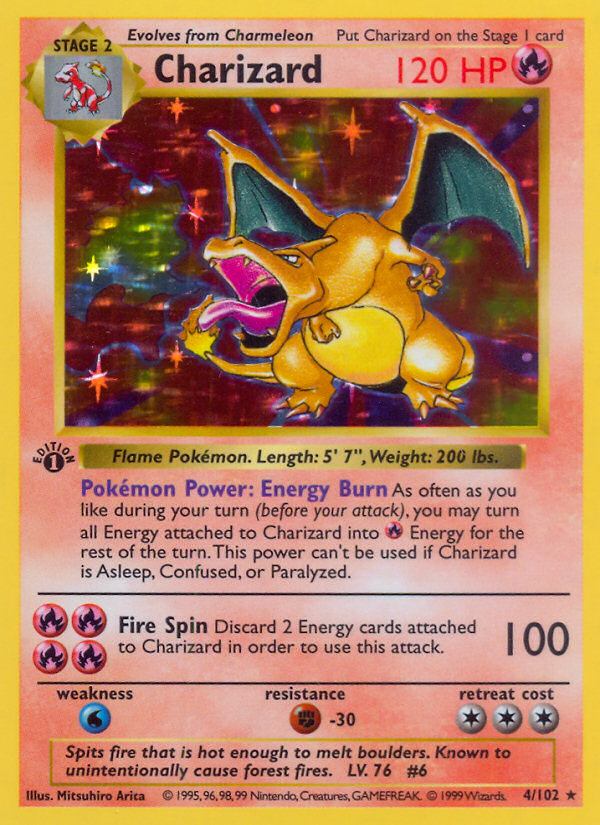
The card that started the modern hobby. PSA 10 Unlimited copies have settled in the $14,000 to $18,000 band through Q2 2026, a far cry from the 2021 spike past $400,000 for 1st Edition Shadowless examples but historically very strong. Raw NM copies in the $400 to $700 range are the realistic entry point for most collectors.
RarePull call: Hold. If you already own one, do not sell into a soft market. If you do not, a PSA 7 to 8 Unlimited copy is the cleanest way to own the icon without taking five-figure risk.
2. Umbreon ex SIR, Prismatic Evolutions (#161, sv8pt5)
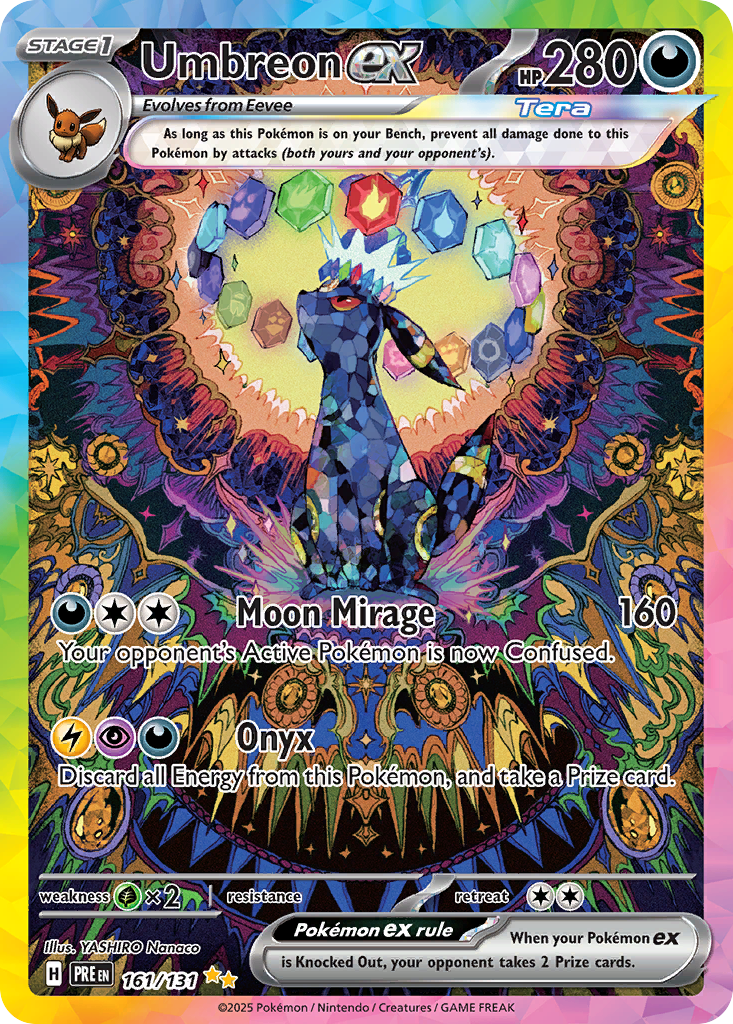
The defining modern chase card. Raw NM copies cleared $250 by April 2026, and PSA 10s have crossed $500 with momentum. This is the Charizard of the Scarlet & Violet era, the single card non-collectors recognize. Print run is finite even if it gets bigger than expected, because the set is already cycling out of WotC’s print priority.
RarePull call: Buy raw under $230, grade your NMs. A PSA 10 submission costs around $20 to $30 all-in and currently doubles your money.
3. Charizard ex SIR, Scarlet & Violet 151 (#199, sv3pt5)
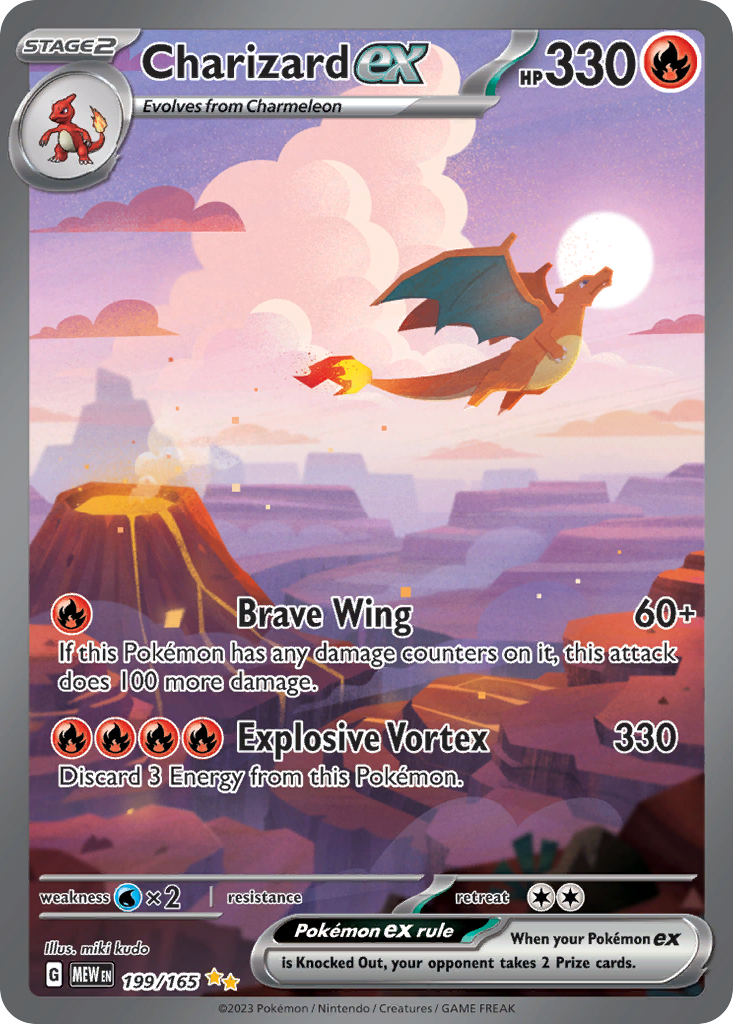
The “Moonbreon equivalent” for the 151 set, except Charizard never stops being Charizard. Raw copies sit between $180 and $230 in May 2026, with PSA 10s in the $380 to $450 range. 151 was overprinted relative to most SV sets, which is why the SIRs are still attainable, but Charizard demand outpaces print run on a long enough timeline.
RarePull call: Buy. A PSA 10 under $400 looks cheap compared to where this card lives in 2028.
4. Pikachu ex SIR, Surging Sparks (#238, sv8)
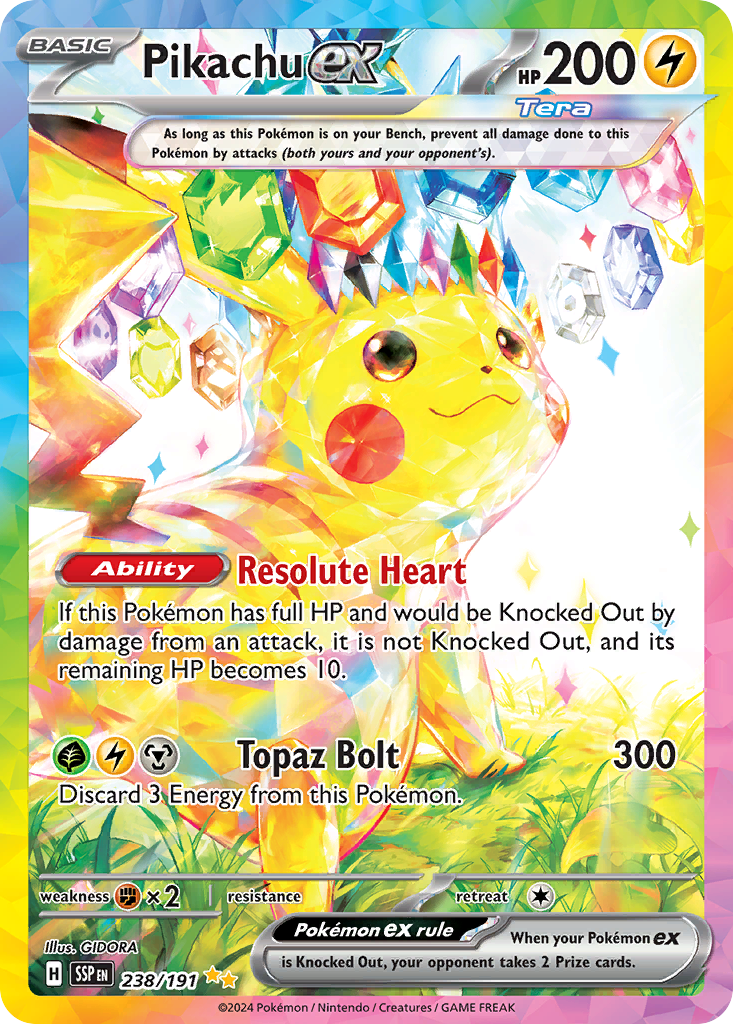
The “balloon Pikachu” full-art. This is the trophy SIR of Surging Sparks and one of the most photographed cards on TCG Twitter. Raw NM is $130 to $160, PSA 10s are $280 to $340. Pikachu carries the same cross-generational appeal as Charizard, with stronger appeal to international and casual collectors.
RarePull call: Buy graded. Centering on this card is brutal, the gradable upside is real.
5. Base Set Blastoise (#2, 1999, Unlimited Holo)
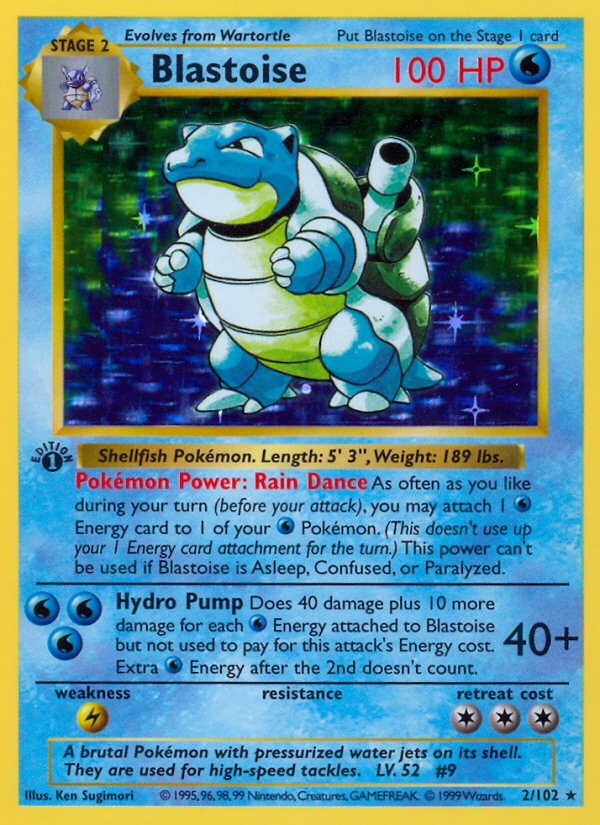
The forgotten starter. Unlimited Holo PSA 9s sit around $400 to $550, PSA 10s clear $1,800. Blastoise will never run with Charizard, but the gap has stretched too wide. If you want vintage exposure without paying Charizard prices, this is the value play of the original three.
RarePull call: Buy PSA 8 to 9. Vintage water is undervalued versus fire across the board.
6. Eevee ex SIR, Prismatic Evolutions (#167, sv8pt5)
The “gateway” Eeveelution card for the entire set. Less iconic than Umbreon ex SIR but a third of the price, and it is the card new collectors target first when they enter the Prismatic chase. Raw copies trade in the $80 to $110 band.
RarePull call: Buy. Pairs with Umbreon as a complete-the-set play that compounds together.
7. Sylveon ex SIR, Prismatic Evolutions (#156, sv8pt5)
The number-two Eeveelution in the set behind Umbreon, and the most visually striking in many collectors’ opinion. Raw NM sits at $120 to $150 as of May 2026. Sylveon has the deepest fandom of the post-Gen-3 Eeveelutions and a built-in audience in the cosplay and art-print scenes.
RarePull call: Buy under $130. This card runs in any “complete the Eeveelution SIRs” rally.
8. Mega Charizard ex SIR or Mega Hyper Rare, Mega Brave (me2)
The big-print Mega Charizard ex from the Mega Brave subset has been the most reliable Charizard play of 2026. The Mega Hyper Rare in particular is trading $380 to $480 raw. Print is tighter than 151, the Mega gimmick has visible competitive play in the rotation, and Charizard does not need help to move.
RarePull call: Buy the Mega Hyper Rare, skip the standard ex. The premium tier is where the appreciation lives.
9. Meowth ex SIR, Perfect Order (#121, me3)
The dark-horse chase of the new Perfect Order set. It’s a non-Mega ex, but the artwork is the most-shared single from the set on social. Raw is in the $90 to $130 range about six weeks post-release. Limited-supply non-Mega SIRs from sets dominated by Mega cards tend to age well, see the trajectory of trainer SIRs from Prismatic Evolutions.
RarePull call: Buy. This is the sleeper of the set.
10. Pikachu Illustrator (CoroCoro Comics Promo, 1998)
The grail. Not a card you go shopping for, but worth naming in any 2026 list because it sets the ceiling for every other Pokemon card in the world. PSA 7 copies last sold for $900,000-plus in private sales. Three known PSA 10 copies exist. If you ever see one for sale, you do not need this article.
RarePull call: Aspirational. Owning one is not realistic for 99% of collectors. Tracking its sales tells you where the top of the hobby is heading.
The 2026 Portfolio Framework
A ranked list of cards is half the picture. The other half is how you split your collecting budget across formats. Here is the framework the RarePull team is using.
Sealed product (40% of budget): Sealed is the lowest-stress hold for collectors who do not want to track grading turnaround times. Focus on Premium Collections from sets with strong chase cards, Booster Bundles from Prismatic Evolutions and Surging Sparks while they are still findable near MSRP, and one Booster Box per major set release for the multi-year hold pile. Avoid mediocre sets, you can always tell which ones those are because the chase cards are not memes yet.
Raw singles, ungraded (30%): The flex layer. This is where you buy the chase SIRs you actually want to look at. Keep raw copies in penny sleeves inside top loaders, store them in a fireproof box, and resist the urge to flip them every time TCGPlayer twitches. Cards in this bucket should be ones you would still own at a flat market.
Graded singles, PSA 9 to 10 (20%): The compounder. Graded modern SIRs from blue-chip sets (Prismatic, 151, Surging Sparks) have been the strongest risk-adjusted return in the hobby for the last 18 months. Stick to PSA for resale liquidity unless you have a specific reason to grade with CGC or BGS. We have a full grading breakdown in our PSA vs BGS vs CGC guide.
Vintage exposure (10%): A small allocation to PSA 7 to 8 Base Set, Jungle, Fossil, and Neo-era holos. Vintage is your hedge against modern oversupply. It is not going to double in a year, but it will not zero either, and it is the part of the collection that gets the most attention when you show it off.
How to Avoid the 2021 Mistake
If you bought into the hobby in 2020 or 2021, you remember what overpaying felt like. The lesson from that cycle was not “Pokemon is a bad investment”, it was “Pokemon is a bad short-term trade”. The cards that recovered fastest and went on to make new highs were the genuinely iconic ones, Base Set Charizard, the Eeveelution SIRs, anything Pikachu, Mewtwo, or Rayquaza. The cards that never recovered were the random mid-tier holos people piled into because some YouTuber said they were “the next big thing”.
The 2026 corollary: do not let the next hype cycle pull you off the framework above. If a card is not in one of the four buckets, it is probably noise.
Building From Here
If you are new to collecting in 2026, start with our investing guide for the long-form playbook, or our 50-dollar monthly budget walkthrough if you want to scale in slowly. For storage, the binders and sleeves guide covers everything we use to protect the cards above.
Collect what you love. Then check it against the framework. The two answers should agree about 80% of the time, and that is the collection you keep.
Sponsored
Build Your Collection
Explore more guides, set reviews, and market insights from TCG Collector Hub.
Browse More Guides
Build Your Collection
Discover more guides, investment tips, set reviews, and market analysis from TCG Collector Hub.