 🃏 Market Watch
 Table of Contents
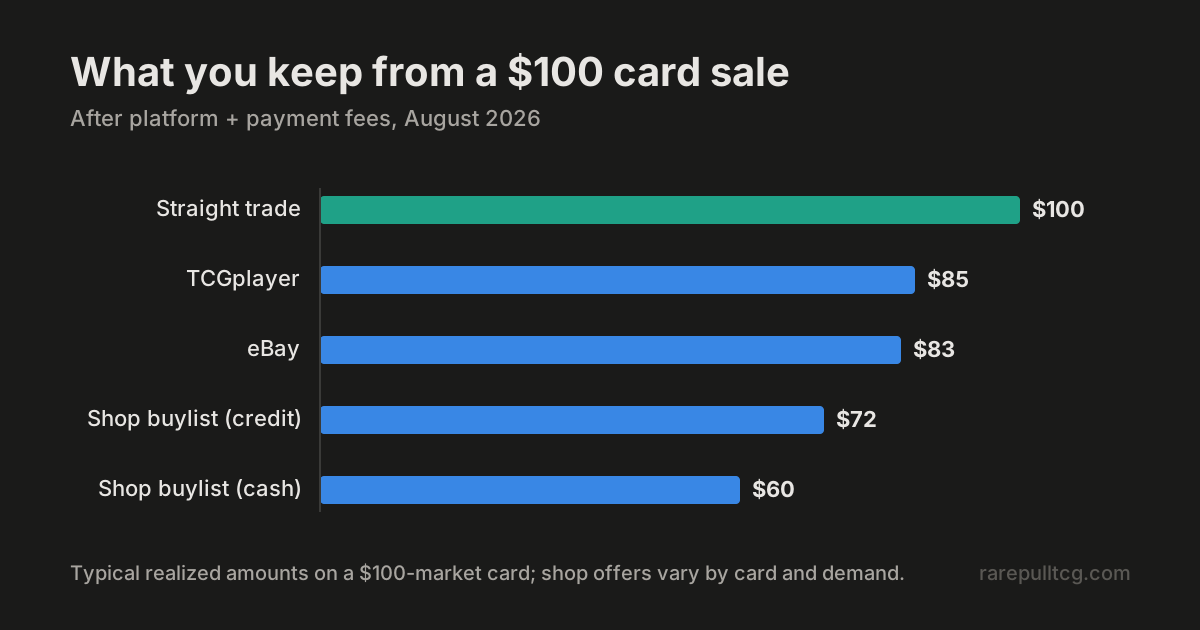
Everyone writes about pulling cards and grading cards. Almost nobody writes honestly about the other half of the hobby: turning cards back into money. So we sat down with the current fee schedules, ran the math on a $100 card across every mainstream selling channel, and the spread surprised even us. Depending on where you sell, that $100 card puts anywhere from about $60 to about $87 in your pocket.
Here is the full breakdown as of August 2026, including the fees each platform does not put on the front page, and our honest take on which channel fits which kind of seller.
The Headline Math: What You Keep From a $100 Sale
Before the details, the summary. Sell a card with a $100 market price and here is roughly what lands in your account after platform fees and payment processing, assuming the buyer pays shipping or it is priced in:
- TCGplayer: about $85 after commission and processing
- eBay: about $83 after final value fees, less if you use promoted listings
- Local card shop (cash buylist): typically $55 to $65
- Local card shop (store credit): typically $65 to $80
- A straight trade with another collector: the full $100 in card value, zero fees
That last line is not a gimmick, and we will come back to it, because trading is the most underrated “selling” channel in the hobby right now.
eBay: Biggest Audience, Middling Take-Home
eBay remains the deepest buyer pool for Pokemon singles, especially graded cards and anything with auction energy behind it. The standard final value fee for trading cards sits around 13.25% of the total sale (item plus shipping the buyer pays), plus a $0.30 per-order fee. On a $100 card, that is roughly $13.55 gone before you ship anything.
The quiet cost on eBay is visibility. Organic search on a common card buries you under hundreds of identical listings, so many sellers pay for Promoted Listings, which adds another 2% and up (sellers of hot modern cards routinely run 5% or more to stay on page one). Stack a 5% promotion on top of the base fee and your $100 card is now paying eBay close to $19.
Where eBay genuinely earns its cut: graded slabs, rare vintage, and anything where an auction can run away. If two bidders want your PSA 10, the auction format can beat every fixed-price channel in this article. For raw modern singles under $20, the fees plus the shipping-supplies grind make it hard to justify.
TCGplayer: The Default for Singles, and Slightly Cheaper
TCGplayer is where the serious singles market lives, and its pricing is the reference point half the hobby uses anyway (it is what we cite in our most expensive pullable cards ranking). For a standard seller account, the marketplace commission runs about 10.25%, plus payment processing around 2.5% + $0.30. On our $100 card that is roughly $13.35 in fees at list price, but TCGplayer sales tend to clear at true market price rather than the optimistic prices that sit unsold on eBay, so realized value is usually tighter to the number you expected.
The catch is velocity and effort. TCGplayer buyers are price-sorted robots (affectionately). Your card sells when it is the cheapest verified copy, which means repricing against the market every few days. Volume sellers live in that workflow; a collector offloading twelve cards a year may find it tedious.
One more honest note: cards under about $5 are barely worth listing individually anywhere once you account for a sleeve, a toploader, an envelope, and your time. Batch them into lots or take them to a shop.
The Local Card Shop: You Are Paying for Convenience, and That Is Fine
A shop buylist will offer you somewhere between 50% and 65% of market in cash for most modern cards, a bit more for high-demand staples, and usually 10 to 15 points more if you take store credit instead. On our $100 card, expect an offer around $60 cash or $70-something in credit.
Framed as a fee, that is a 35-45% cut, which sounds brutal next to eBay’s 13%. But it is not really the same product. The shop pays you today, takes on the risk that the card dips next month, handles grading disputes and returns and the buyer in another state who claims the card arrived with a whitened corner. If you value your time at anything above zero, moving a shoebox of mid-value cards in one Saturday trip has real worth. We use buylists for exactly that tier: too good to bulk out, not good enough to list individually.
The Zero-Fee Channel: Trading
Here is the math nobody runs. If you sell a $100 card at 85% realized and then buy the $100 card you actually wanted (paying someone else’s fees baked into their price), you converted $100 of cardboard into roughly $85 of different cardboard. A fair one-for-one trade converts $100 into $100.
The historical problem with trading was trust and matching: finding someone who has what you want, wants what you have, and will not ghost you halfway through. That is exactly the problem the new generation of collector trading tools is built to solve. Our own RarePull Trades does binder-to-binder matching with live market values on both sides and a fairness meter, and both parties confirm before anything ships. If your goal is upgrading a collection rather than cashing out, run the trade math before you list anything, because an 0% fee beats a 13% fee every single time.
Which Channel for Which Seller
Cashing out a few high-value cards ($50+, especially graded): eBay auction or TCGplayer fixed price. Check sold comps first, not asking prices.
Steady singles volume: TCGplayer, no contest. Lower effective fees than eBay once you drop promoted listings from the equation, and buyers who already know what the card is worth.
A shoebox of playables and mid-value pulls: shop buylist, take the credit bonus if you were going to spend it there anyway.
Upgrading your collection: trade first, sell only what nobody wants. Your master set math gets a lot friendlier when incoming cards cost you 0% instead of a fee spread.
Bulk (anything under a dollar): buylist by the thousand-count box and do not look back. The per-card math will only make you sad.
The Fees Are Not the Whole Story
Last thing, because it trips up new sellers constantly: realized price matters more than fee percentage. A card that sells for $92 on TCGplayer at 12.75% total fees nets you more than the same card sitting on eBay at $100 asking price for six months and finally closing at $88 minus 18% in fees and promotions. Watch sold prices, price to move, and treat the fee table as one input rather than the decision.
Our take for late 2026: fees have crept up slowly everywhere over the past few years, the spread between channels is stable, and the smartest money in the hobby is quietly trading instead of selling. The cards you actually want are someone else’s liquidity problem. Be their solution and keep the 13%.
Sponsored
Build Your Collection
Explore more guides, set reviews, and market insights from TCG Collector Hub.
Browse More Guides
Build Your Collection
Discover more guides, investment tips, set reviews, and market analysis from TCG Collector Hub.