 🃏 Collecting
 Table of Contents
Walk into any card shop, scroll any collecting feed, or peek at a Discord server right now and you will see the same thing over and over: binders. Not slabs, not vaults, not safety deposit boxes. Plain old 9-pocket binders, packed page by page, getting passed around tables and shown off online like trophies.
After years of the hobby being dominated by graded slabs and sealed product flipping, the humble binder has come roaring back, and people are going genuinely crazy with them. Full master sets. Region-by-region National Dex runs. Themed pages built around a single Pokemon. Collectors are pouring hundreds of hours into pages that will never be “worth” what a single graded Charizard goes for, and they could not care less. Here is why, and how you can jump in this weekend.
Why Binders Took Over Again
The slab era made collecting feel like a stock portfolio. Buy, grade, store, sell, repeat. It worked, but it was not exactly fun, and you could not actually look at your cards without cracking a case or squinting through plastic.
Binders flipped that. A few things lined up at once:
- They look incredible on camera. A finished binder page is a wall of art, and a full page of holos under good light is one of the most satisfying things in the hobby to film and post. Social feeds are full of “completing the page” clips for a reason.
- The dopamine of the gap. An empty pocket is a tiny open loop your brain wants to close. A binder turns collecting into a visible progress bar, and progress bars are addictive.
- They are accessible. You do not need a five figure budget to feel the rush. A binder of base era commons and a few mid value chase cards still feels like an accomplishment when the pages fill in.
- You can actually enjoy them. Flip through, hand one to a friend, reorganize a page at the kitchen table. Cards were made to be looked at, and binders let you do that.
What a “Master Set” Actually Means
If you have heard collectors throw around “master set” and “grandmaster set,” here is the quick version.
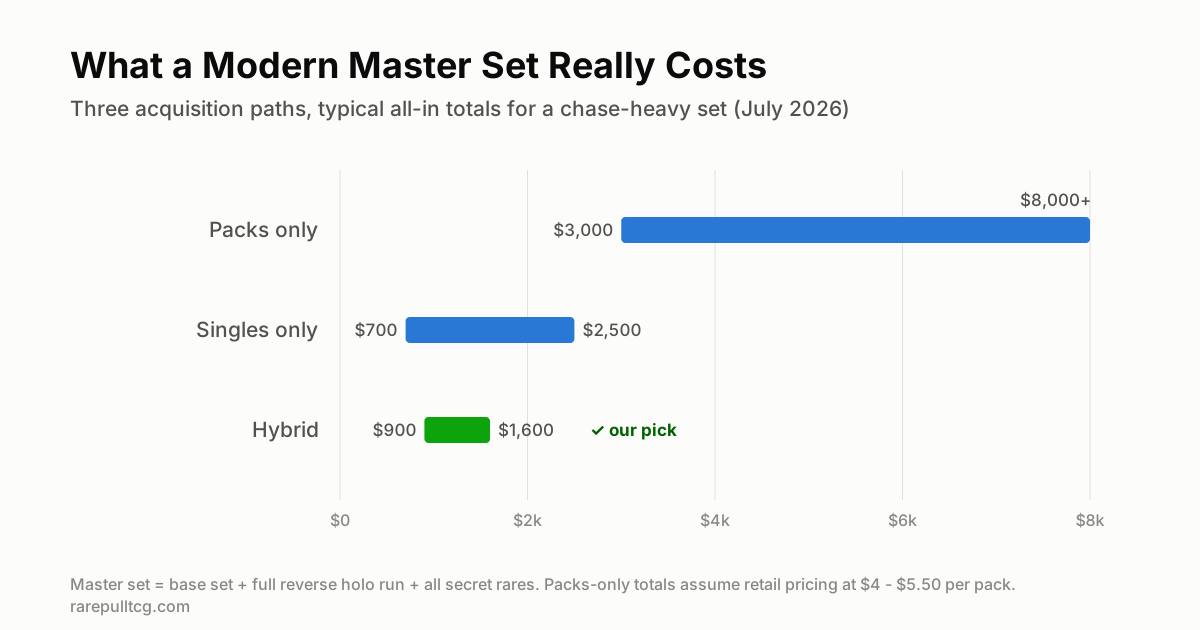
A master set is every card in a single expansion, including the variants. That means the base card, the reverse holo, the holo, and any secret rares that fall beyond the printed total. A set listed as 122 cards might be 250-plus once you count every version, which is exactly why it becomes an obsession. You are never quite done.
A grandmaster set pushes even further, chasing every possible variation, promos, error cards, and oddities included. It is the deep end of the pool, and the people swimming in it love it there.
The point is the same either way: a master set turns one expansion into a long, structured hunt, and a binder is the perfect place to track it.
The Placeholder Trick Every Serious Binder Builder Uses
Here is the move that separates a messy binder from one that actually motivates you to finish: placeholders.
Instead of leaving empty pockets, collectors print small cards that show exactly which card belongs in each slot, then drop those into the open pockets. Now your binder is not full of blank gaps, it is a complete map of the set with the missing cards clearly marked. Every time you pull or buy a card, you swap out a placeholder for the real thing. The page is “done” from day one in layout, and slowly turns real as you go.
It sounds small. It is not. Seeing the whole set laid out, with your progress visible at a glance, is the single biggest reason people stay motivated through a 250 card grind.
The Free Tool We Built To Do This For You
Making placeholders by hand is miserable. So we built one free tool, the Binder Maker, that generates them for you, print ready and sized to drop straight into standard 9-pocket pages. It builds a binder four different ways:
- By region for National Dex runs. Pick a region, Kanto through Paldea, and get printable pages of every Pokemon in that generation, each showing the 8-bit sprite and its National Dex number. Flip between a retro 8-bit look and modern 3D renders. Perfect for the “one of every Pokemon” binder.
- By set for chasing a specific expansion. Search any of the 173 Pokemon TCG sets, from Base Set to the newest releases, and generate placeholders for the whole thing. Choose the real card image, so each slot shows the exact card you are hunting, or the clean sprite version. Every placeholder is numbered in proper collector notation, like 1/122.
- By Pokemon for a single-Pokemon collection. Want a Pikachu binder, or every Gengar ever printed? Pick the Pokemon and it pulls every card of it across every set.
- By artist for the fast-growing illustrator-collecting crowd. Pick from hundreds of artists and get every card they ever drew.
It is completely free. Pick what you want, preview it, download the PDF, and print.
How To Build Your Binder This Weekend
- Grab a 9-pocket binder and pages. Side loading pages are worth the small upgrade, they hold cards more securely than top loading.
- Pick your project. A full region, a single set, one Pokemon, or one artist in the Binder Maker. Start with one. Master set grinds are long, and finishing one beats half-starting five.
- Print at actual size. In your printer dialog set margins to none and scale to 100 percent or “actual size.” This is the step people skip, and it is the difference between placeholders that fit your pockets and ones that do not.
- Cut on the guides and load up. Drop the placeholders into every empty pocket. Your binder is now a complete, organized map of the set.
- Swap as you go. Every new card replaces a placeholder. That swap is the whole point, and it never stops feeling good.
That is the entire craze in a nutshell. Binders make collecting visible, social, and fun again, and placeholders turn a pile of cards into a project you actually want to finish.
Grab a region, a set, a single Pokemon, or an artist, print a page, and see for yourself why so many collectors cannot put their binders down. The Binder Maker is free and live now.
Sponsored
Build Your Collection
Explore more guides, set reviews, and market insights from TCG Collector Hub.
Browse More Guides
Build Your Collection
Discover more guides, investment tips, set reviews, and market analysis from TCG Collector Hub.