 📈 Market Analysis
 Table of Contents
Six months in, and the 2026 market has already separated the cards that mattered from the cards that didn’t. Some of our spring calls aged well. A couple aged like milk. So we pulled the receipts.
This is our mid-year scorecard. Every line below has a price stack and a verdict, because “it’s a great card” isn’t a strategy. We tracked these through eBay sold listings and TCGPlayer market data from January through this week, and we’re telling you what we’d do with each one right now, not what we wish we’d done in February.
Two big themes ran the first half. The 30th anniversary kept a steady bid under vintage. And the Mega Evolution rollout, which we’d been positioning around since spring, turned out to be the most volatile story of the year. Both showed up in the numbers.
Held value: the cards that earned their spot
These are the positions we’d keep holding, and in some cases keep buying. Each one did something the broad market didn’t: it went up, or it refused to go down.
1. Umbreon VMAX Alt Art (Evolving Skies, #215) - HOLD, add on dips
We flagged this in our spring picks at $150-180 raw, and we still mean it. Moonbreon barely moved on the chart through H1, which sounds boring until you remember the broad modern market dropped while it held. Raw NM copies traded in the $160-200 band most of the year, with PSA 10s holding the $700-850 range as of mid-June.
The thesis hasn’t changed: Evolving Skies sealed is gone and isn’t coming back, the Umbreon fanbase doesn’t sell, and the floor is concrete. This is the closest thing to a savings account in modern Pokemon. Verdict: hold what you’ve got, add anything under $175 raw.
2. Lugia (Neo Genesis, #9 Holo) - BUY, still the best grading arbitrage in vintage
Our favorite grading play from spring did exactly what we said it would. Raw NM copies that were $60-90 back in March drifted up to roughly $80-110 by June, while PSA 9 comps held above $300 and the occasional PSA 10 cleared $1,000. The gap between a raw card and a graded one is still wide enough to drive a truck through.
The 30th anniversary is doing the heavy lifting here. The Pokemon 2000 generation is the demographic with money right now, and Neo Genesis is their Base Set. Verdict: still a buy, especially in batches you can submit together. The arbitrage hasn’t closed.
3. Prismatic Evolutions sealed - HOLD, the slow burn is real
We covered the Eeveelution SIRs in depth in our Prismatic Evolutions market analysis, and the singles told a clear story in H1: the chase cards held, the bulk didn’t. The Espeon ex and Umbreon ex SIRs stayed firm in the high hundreds, while commons and lower rares got crushed by how much product flooded the market.
Sealed is the cleaner play. ETBs that were near retail in spring crept up as inventory thinned through May and June. This set printed huge, so the floor on bulk is low, but the sealed product and the named SIRs are doing fine. Verdict: hold sealed and the chase singles, ignore the bulk.
4. Vintage Base Set holos (PSA 7-9, not just Charizard) - HOLD
The quiet winner of the first half. We told people in spring that the 30th would move all of Base Set, not just the Charizard, and that’s what happened. Pikachu, Blastoise, Venusaur, even the non-holo trainers in graded slabs all ticked up 5-15% through H1 on consistent anniversary demand. Nothing dramatic. Just a steady, broad lift that didn’t reverse.
This is the boring core of a vintage portfolio. Verdict: hold, and if you’re building, mid-grade holos remain the most accessible way in. For the bigger framework on appreciation and timing, our Pokemon TCG investing guide walks through how we weigh this stuff.
5. Mega Charizard EX (XY Flashfire, #107) Full Art - HOLD, but trim into strength
Here’s where we get to grade our own homework. We called this at $40-60 raw in spring on the Mega Revival thesis. It worked. When Mega Evolution content ramped up and the me1-me4 sets started landing, XY-era Mega EX cards caught a bid, and this Charizard pushed into the $70-95 raw range by June, with clean copies occasionally higher.
That’s a solid first-half return on a sleeper. But it’s also a card that ran on speculation, and speculation cuts both ways. Verdict: hold the core, but if you bought a stack at $50, trimming a few into this strength is smart risk management. Don’t get greedy on an XY card riding a hype cycle.
Lost value and overhyped: the cards we’d avoid or sell
Now the painful half. These either bled out, never delivered, or are priced for a future that isn’t showing up.
1. Mega Darkrai / Pitch Black preorders - SELL or avoid
We saw this one coming and said so in our Pitch Black preorder crash breakdown. Preorder hype ran the Mega Darkrai chase cards and sealed product way ahead of reality, and when the set actually landed, the floor gave out. Cards that were carrying triple-digit preorder premiums in the spring deflated hard once supply hit and pull rates became clear.
This is the textbook Pokemon preorder trap: buy the hype, hold the bag. Verdict: if you’re still sitting on preorder-priced Pitch Black product, the rip-and-flip window has closed. Avoid until prices settle to a real post-release floor, which they hadn’t fully found as of mid-June.
2. Mega Evolution me1-me4 bulk and mid-rares - AVOID
The Mega rollout was the story of H1, but the way most people played it was wrong. We dug into the math in our me1-me4 pull rates and expected value piece, and the conclusion held: the expected value on ripping these sets for profit is underwater unless you hit a top chase. The bulk and mid-rares from me1 through me4 are already cheap and getting cheaper as product keeps opening.
The named chase SIRs are a different conversation and some held fine. But the broad set? It’s modern product printed to demand, and demand for the filler is thin. Verdict: avoid the bulk entirely. If you want Mega exposure, buy a specific chase card, not boxes to crack.
3. Pokopia Ditto cards - SELL the spike
We documented the Pokopia Ditto price surge when it happened, and surges like this have a half-life. The Ditto cards spiked on a content-driven moment earlier in the year, the kind tied to a streamer cycle and a fresh set buzz rather than durable collector demand. By June, the froth had come off and prices settled well below the peak.
There’s nothing wrong with the cards. The problem is anyone who bought the top. Verdict: if you caught the spike early, that gain was meant to be sold, not held. Content-driven pops are trading opportunities, not investments. Don’t confuse the two.
4. PSA 10 bulk from high-supply 2023-2024 sets - STILL AVOID
We said this in spring and H1 only confirmed it. Paldea Evolved, 151 English, Obsidian Flames: these printed enormous quantities, and the graded population numbers reflect it. PSA 10s of anything that isn’t a genuine chase card (151’s Mew ex SAR and Charizard ex SAR remain the exceptions) have suppressed ceilings because the supply of perfect copies is gigantic.
Grading fees plus a flat ceiling equals a money pit. Verdict: avoid grading bulk from these sets. The math doesn’t work and didn’t get better this year.
5. Recent Charizard ex (Obsidian Flames) SIR - HOLD at best, no upside
Same call as spring, and it’s still right. This card sat near $80-100 raw for months and barely twitched through H1. Charizard demand is genuine, but this specific card came out of a set that’s still being opened in volume, and reprint risk on recent Scarlet & Violet product never goes away. Verdict: if you own it, hold and wait, there’s no urgency to sell into nothing. But it’s not a buy, and it wasn’t the Charizard play this year. Base Set was.
The honest scorecard
Our spring sleepers mostly worked. Lugia, Moonbreon, the Flashfire Charizard, and the broad Base Set call all held or gained. Where we’d push back on our own past self: we were right to like the Mega Revival theme, but the way to play it was vintage XY cards and named chases, never fresh sets to rip or preorder speculation. The Pitch Black and me1-me4 bulk stories proved that the hard way for a lot of buyers.
The pattern across the whole half is simple. Scarcity and locked supply held. Open-ended modern product, no matter how hyped, drifted down. Every winner above had a closed supply story. Every loser was something you could still buy by the case.
H2 2026 outlook: where we’re looking next
Heading into the back half, three things are on our board.
First, the anniversary tailwind isn’t done. The 30th has been a steady, measured driver all year, not a 2021-style melt-up, and that’s healthier. We expect Base Set and Neo-era vintage to keep grinding higher into the holidays, when collector spending peaks. We’re still buying mid-grade vintage holos and submitting Lugia.
Second, the Mega Evolution arc has more sets coming. The early ones taught us the lesson: don’t chase boxes, target the specific cards that hold. We’ll be watching the next wave for named chases that overcorrect downward, the way Flashfire did before it ran. A post-release dip on a key Mega SIR is a window, not a warning.
Third, watch the Q3 and Q4 English releases for the same preorder trap that burned Pitch Black buyers. The smart move is to let the hype sell to itself, then buy the floor four to eight weeks after a set drops, once pull rates are public and the rippers have moved on.
We’ll run this scorecard again at year-end and see how the second half graded out. If you’re building a position from here, start with the closed-supply names, keep some cash for the post-release dips, and let the hyped product go open itself.
Nothing here is financial advice. Pokemon cards are collectibles, prices move fast, and several figures above will be stale by the time you read this. Always check current comps before you buy or sell. Buy what you love and treat the upside as a bonus.
Sponsored
Build Your Collection
Explore more guides, set reviews, and market insights from TCG Collector Hub.
Browse More Guides
Build Your Collection
Discover more guides, investment tips, set reviews, and market analysis from TCG Collector Hub.
You Might Also Like
 Market Analysis
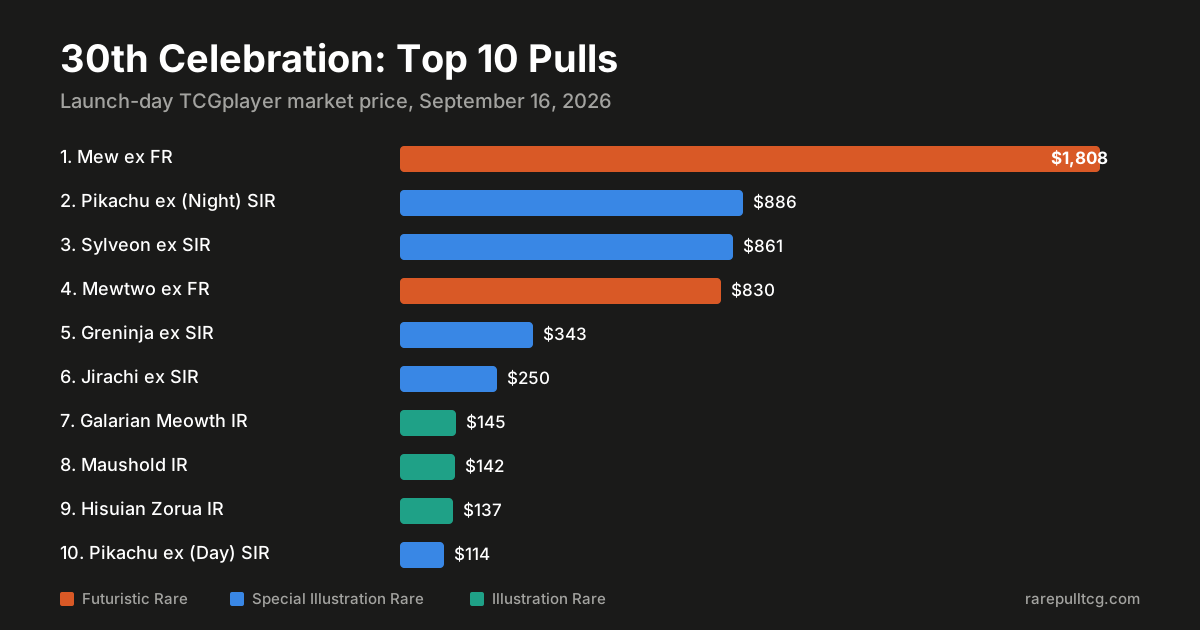
 Pokemon 30th Celebration Is Out Today: The Top 10 Pulls, Launch-Day Prices, and What We Would Actually Chase
 Market Analysis
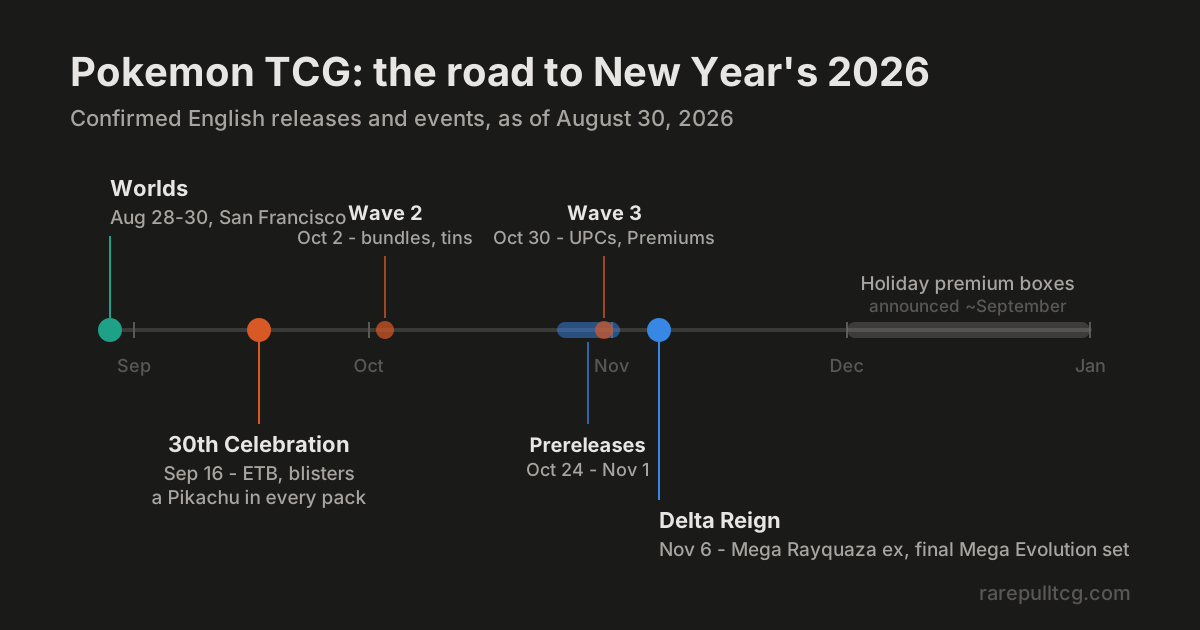
 Pokemon TCG Q4 2026 Preview: Worlds, 30th Celebration, Delta Reign, and Where the Money Goes
 Market Analysis