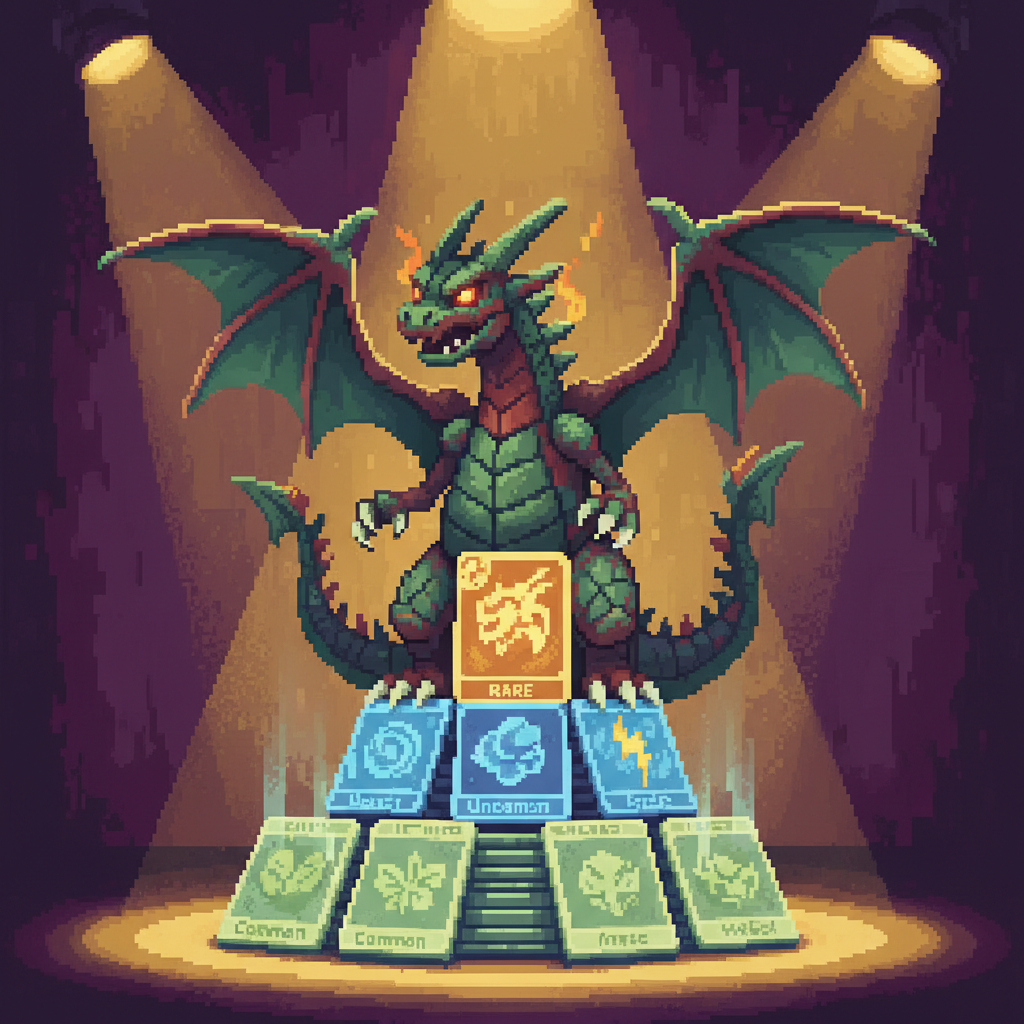
 📈 Market Analysis
 Table of Contents
Open any Pokemon forum, subreddit, or eBay listing and you’ll find the same question on repeat: “Is my Charizard worth anything?” The answer is almost always frustrating, because it depends on details most people don’t know to look for. One Charizard sells for $420,000. Another, that looks nearly identical to a non-collector, sells for $4. Both are real cards. Both say Charizard. Both have the fire-breathing art that’s been burned into every 90s kid’s brain since 1999.
So what gives? Why is the price spread so absurd, and how do you figure out where your card actually lands?
This is the honest breakdown, with no hype and no “every Charizard is worth thousands” nonsense.
The Four Levers That Actually Move Charizard Prices
Every Charizard’s value comes down to four things. Get all four right and you’ve got a grail. Miss on any of them and you’ve got a binder filler.
1. The set. Base Set Charizard from 1999 is the one everyone wants. Later prints (Legendary Collection, Expedition, modern Scarlet and Violet sets) are completely different cards from a value standpoint, even when the art is similar.
2. The print run. Within Base Set alone there are three distinct prints: 1st Edition, Shadowless, and Unlimited. Same art, same Pokemon, vastly different prices.
3. The condition. A PSA 10 of a card might be worth 50 times a PSA 6 of the exact same card. Condition is the single biggest multiplier in the hobby.
4. The variant. Holo vs. non-holo, reverse holo, full art, alt art, secret rare, gold rare. Modern Pokemon sets print a dozen versions of the same Charizard, and the price gap between them can be enormous.
Miss on any one of these and you’re not looking at the card you think you’re looking at.
The Tiers, From Grail to Bulk
Here’s roughly how Charizard cards stack up across the major eras. Prices are approximate market ranges as of mid-2026 and assume the card is in decent collector-grade shape (not beat to death, not graded gem mint).
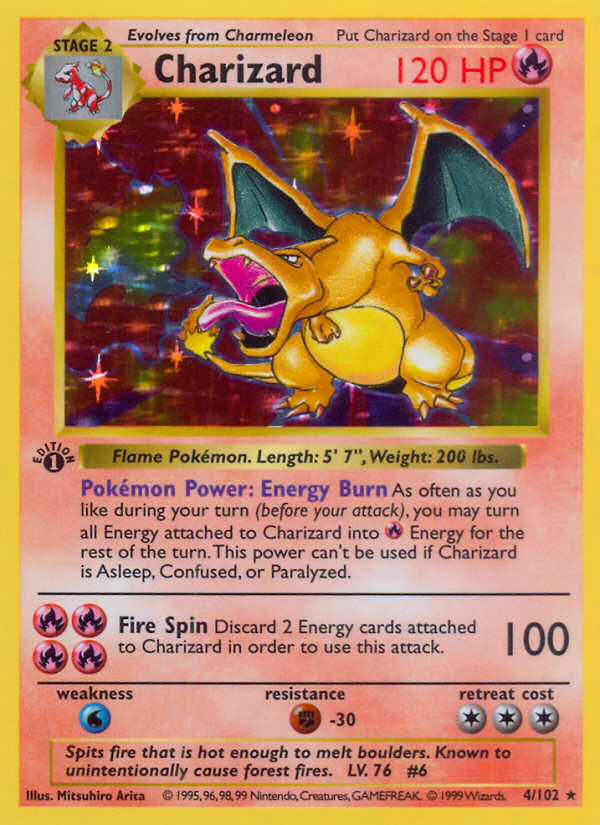
Tier S: 1999 Base Set 1st Edition Holo
This is the king. PSA 10 copies have crossed $400,000 at auction. Even ungraded near-mint copies clear $10,000 to $20,000 on a regular day. What makes it special: tiny print run, the “1st Edition” stamp under the art, iconic status, and the fact that almost nobody kept theirs in good condition.
If your Charizard has a small black stamp on the left side of the art that says “Edition 1,” stop reading this and go get it graded.
Tier A: 1999 Base Set Shadowless Holo
The middle child. Shadowless prints came between 1st Edition and Unlimited, identified by the lack of a drop shadow on the right side of the art box. PSA 10s can hit $50,000+, raw near-mint copies trade in the $2,000 to $6,000 range.
Tier B: 1999 Base Set Unlimited Holo
This is the one most 90s kids actually owned. It has a drop shadow on the art box and no “Edition 1” stamp. Still a real, valuable card: PSA 10 copies push past $10,000, raw clean copies sit around $300 to $800. Not retirement money, but not nothing.
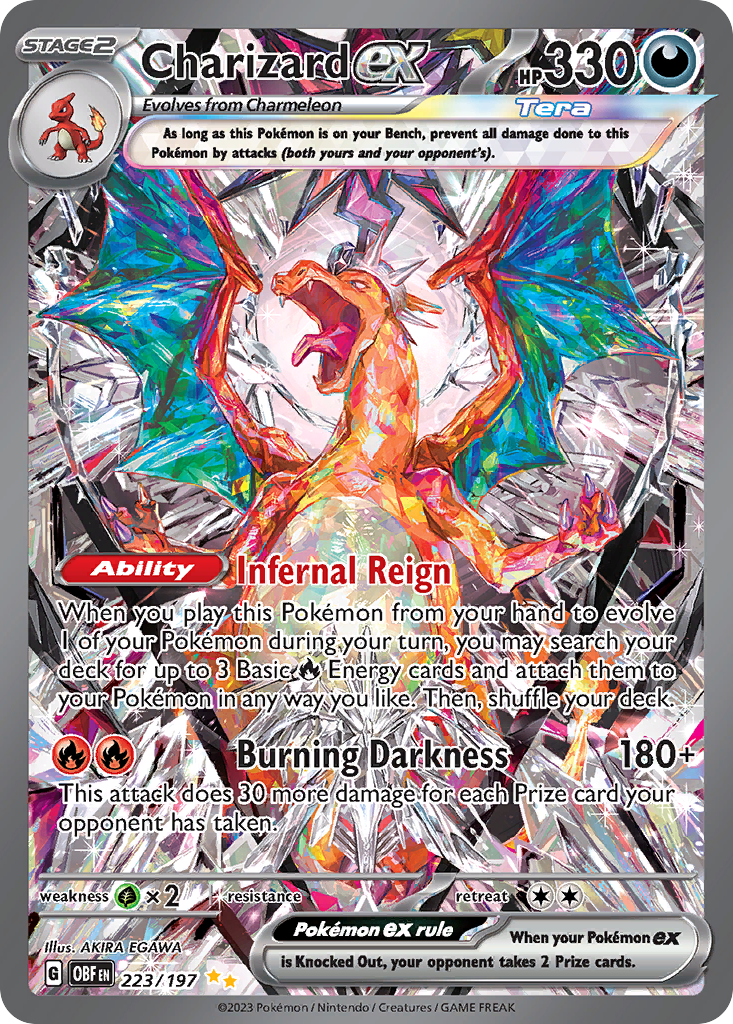
Tier C: Modern Chase Charizards
Scarlet and Violet era has produced some genuinely valuable Charizards: alt arts, special illustration rares, and gold cards from sets like Obsidian Flames. These can trade for $300 to $2,000+ depending on the specific card and grade. They’re real money, but they’re modern money, which means print runs are larger and supply keeps growing.
Tier D: Reprints and Promos
The McDonald’s promo Charizard. The Celebrations reprint. The non-holo Base Set common. These cards exist in huge quantities and have minimal collector premium. Most trade for $5 to $50 unless they’re a rare promo variant.
Tier F: Modern Bulk
Most Charizards printed in the last 15 years are worth between $1 and $20. Sorry. The art is still cool. The card is still real. It’s just not rare.
How to Figure Out Which Tier You’re Holding
Three quick checks before you start daydreaming about a down payment:
-
Look at the bottom corner for the set symbol. No symbol? It’s Base Set, and now you need to check for 1st Edition stamp and shadow. Set symbol present? Look up that symbol to identify the set, then look up that specific Charizard’s market price.
-
Check for the “Edition 1” stamp. Small black logo on the left side of the art box. If present, you have something worth grading.
-
Check the shadow. On Base Set, the right side of the illustration box either has a drop shadow (Unlimited) or doesn’t (Shadowless or 1st Edition).
If you’re still not sure, the PSA and TCGPlayer databases both let you look up exact card variants by set and number. That’s the source of truth, not whatever a random buyer offers you at a card shop.
The Honest Takeaway
Most Charizards are not worth thousands. The ones that are, are worth that much because of a very specific combination of age, print run, condition, and variant. The good news is that figuring out where yours lands is a 10-minute job once you know what to look for. The better news is that even a clean Unlimited Base Set Charizard is a legitimate collectible with a real market, and a card worth holding onto for the long run.
The hobby rewards people who actually look at their cards. Take the time.
Sponsored
Build Your Collection
Explore more guides, set reviews, and market insights from TCG Collector Hub.
Browse More Guides
Build Your Collection
Discover more guides, investment tips, set reviews, and market analysis from TCG Collector Hub.
You Might Also Like
 Market Analysis
 Pokemon 30th Celebration Is Out Today: The Top 10 Pulls, Launch-Day Prices, and What We Would Actually Chase
 Market Analysis
 Pokemon TCG Q4 2026 Preview: Worlds, 30th Celebration, Delta Reign, and Where the Money Goes
 Market Analysis