 📈 Market Analysis
 Table of Contents
In most hobbies, mistakes reduce value. In Pokemon card collecting, certain printing errors create some of the most sought-after and expensive cards in existence. Error cards, also called misprints, are factory defects that slipped past quality control, making them genuinely rare one-of-a-kind collectibles.
Not every misprint is valuable. A slightly off-center card might add a few dollars. But the right error on the right card can turn a $5 common into a $5,000 collector’s item. Here’s what you need to know about Pokemon card error prints in 2026.
Why Error Cards Are Valuable
Error cards derive their value from a simple formula: scarcity + demand + documented authenticity. Here’s why collectors pay premiums:
- Genuine rarity, unlike intentionally “rare” cards printed in known quantities, errors are truly unplanned. The number of copies with a specific error is unknown and usually very small
- Historical documentation, error cards provide insight into the printing process and production history
- Uniqueness, no two error cards are exactly alike, giving each one individual character
- Nostalgia, many famous errors come from the earliest print runs, adding vintage appeal
- Grading recognition, PSA, BGS, and CGC now formally recognize and label many error types, legitimizing the subcategory
The error card market has grown substantially since 2020, with dedicated Facebook groups, Discord servers, and eBay sellers specializing exclusively in misprints.
The Most Valuable Pokemon Card Errors
1. No Stage / Evolution Error, Base Set ($500–$10,000+)
Several Base Set cards were printed missing their evolution stage designation. The most famous example is the “No Stage” Vulpix, which is missing the “Basic” label that should appear in the upper left corner. Other cards from early sets have similar missing text errors.
Why it’s valuable: Base Set errors from 1999 are the holy grail of Pokemon misprints. Limited supply plus massive demand from vintage collectors drives prices into four and five figures for graded copies.
2. Shadowless Cards Printed on 1st Edition Sheet ($2,000–$50,000+)
During the transition between 1st Edition and Unlimited Base Set runs, some cards were printed without the shadow border but also without the 1st Edition stamp. These “Shadowless” cards are not technically errors but a transitional print run that’s highly collectible.
However, true errors occurred when 1st Edition and Shadowless sheets got mixed, creating cards with characteristics of both print runs. These hybrid errors are extraordinarily rare and command massive premiums.
Why it’s valuable: The intersection of 1st Edition and Shadowless collecting creates peak demand. Any anomaly from these print runs attracts serious money.
3. Miscut and Off-Center Cards ($50–$5,000+)
Miscut cards result from the cutting machine being misaligned, causing cards to show portions of adjacent cards on the sheet. The value depends on severity:
- Slightly off-center (60/40): Minimal premium, $5–$20 above normal value
- Moderately off-center (70/30): $20–$100 premium
- Severely off-center (80/20 or worse): $100–$500+ premium
- Showing another card’s border/art: $200–$2,000+ depending on the card
- Square cut or completely miscut: $500–$5,000+ for desirable cards
PSA grades miscut cards and notes the error on the label, which adds collector confidence and value.
Why it’s valuable: Severe miscuts are visually dramatic and obviously authentic, you can’t fake a card that shows part of the adjacent card on the printing sheet.
4. Wrong Back / Dual-Sided Errors ($1,000–$15,000+)
Some of the most dramatic errors involve cards printed with the wrong back. Examples include:
- Pokemon cards with Magic: The Gathering backs (both games were printed by Wizards of the Coast)
- Cards with two fronts and no back
- Cards with two backs and no front
- Cards with another Pokemon’s back information
The Pokemon/Magic crossover errors are legendary in both collecting communities and command prices in the five-figure range for confirmed authentic examples.
Why it’s valuable: These errors required two different games’ printing sheets to be loaded incorrectly, an extraordinary factory mistake. They’re verifiable, dramatic, and appeal to both Pokemon and MTG collectors.
5. Ink Errors and Color Shifts ($100–$3,000+)
Printing ink errors include:
- Missing color layers, cards printed without one of the CMYK ink layers, creating ghostly or oddly colored cards
- Extra ink / ink blots, visible ink splatters or smears on the card face
- Color shifts, the entire card printed with colors shifted, creating blue Pikachus or green Charizards
- Double printing, card image printed twice, slightly offset, creating a blurred or shadow effect
A missing yellow ink layer on a Pikachu (making it appear white/blue) is particularly collectible due to the obvious visual impact on an iconic Pokemon.
Why it’s valuable: Color errors are visually striking and create cards that look dramatically different from the intended design. The more iconic the Pokemon, the higher the premium.
6. Crimped Cards ($50–$500+)
Crimped cards have a visible crimp or indent from the packaging machine that sealed the booster pack. The crimp mark runs across part of the card, creating a distinct line. While some collectors consider this damage, the error collecting community values crimps because:
- They prove the card came directly from a factory-sealed pack
- The crimp pattern matches the booster pack sealing mechanism
- They’re relatively uncommon but not impossibly rare, making them accessible entry points for error collecting
Why it’s valuable: Crimps are easy to authenticate (the pattern is consistent with packaging machinery) and provide a gateway into error collecting at lower price points.
7. Holo Bleed ($25–$500+)
Holo bleed occurs when the holographic foil layer extends beyond the intended artwork area, causing the entire card, including the text box and borders, to shimmer with holographic effects. Some cards show subtle holo bleed; others have dramatic full-card holographic coverage.
Why it’s valuable: Holo bleed cards are visually stunning and relatively easy to verify. Heavy holo bleed on popular Pokemon (Charizard, Pikachu, Mewtwo) can command several hundred dollars.
8. Wrong Name / Wrong Attack Errors ($200–$5,000+)
Text errors where a card displays the wrong Pokemon name, wrong attack name, wrong HP, or wrong type are among the most collectible misprints. Famous examples include:
- “Krabby” printed as “Vulpix”, wrong name, wrong everything
- Cards with attack descriptions from a completely different Pokemon
- Wrong weakness/resistance symbols
- Misspelled Pokemon names (less valuable but still collected)
These errors typically come from early print runs before quality control processes were tightened.
Why it’s valuable: Text errors are easily verifiable by comparing to the correct version and create cards that are obviously unique. They tell a story about the printing process.
How to Spot Error Cards in Your Collection
Most collectors have walked past error cards without noticing them. Here’s how to check your collection:
Visual Inspection
- Compare to a reference image, pull up the card on a database like Bulbapedia or TCGPlayer and compare every detail
- Check alignment, hold the card up to a light or compare borders to see if it’s off-center
- Examine the back, look for wrong backs, misalignment, or printing artifacts
- Look at the holo pattern, check if holographic foil extends beyond the artwork area
- Read all text carefully, compare names, HP, attacks, and descriptions to the correct version
Common Misidentifications
Not everything that looks weird is a valuable error:
- Printer lines or scratches that happened after printing (damage, not error)
- Fading from sun exposure (damage, not error)
- Slight off-centering (extremely common, minimal value)
- Pack fresh surface imperfections (normal manufacturing variation)
- Fake error cards, yes, people fake misprints. Be skeptical of anything too dramatic without provenance
Getting Error Cards Authenticated
If you believe you have a genuine error card:
- Document everything, photograph the card next to a correct version for comparison
- Join error card communities, r/PokemonMisprints on Reddit and Facebook groups like “Pokemon Misprints & Oddities” can help identify errors
- Submit for grading, PSA, BGS, and CGC all recognize error cards. PSA labels them specifically, which helps with resale value
- Get multiple opinions, before spending money on grading, get feedback from experienced error collectors
Where to Buy and Sell Error Cards
Buying
- eBay, the largest marketplace for error cards; search “[Pokemon name] error” or “Pokemon misprint”
- Facebook groups, Pokemon Misprints & Oddities is the largest dedicated community
- Instagram, many error card dealers operate through Instagram DMs
- Local card shops, occasionally have error cards in their cases, often underpriced because they don’t specialize
Selling
- eBay auction format, let the market determine value, especially for unusual errors you can’t easily price
- Facebook groups, direct sales to collectors who know what they’re looking at
- Consignment with error card specialists, some dealers specialize in misprints and can reach the right buyers
Important: When selling, always photograph the error clearly and include a comparison to the correct version. Error cards without clear documentation of the error sell for significantly less.
Are Error Cards a Good Investment?
The error card market has matured significantly since 2020. Prices for documented, graded error cards have generally appreciated, particularly for vintage (WOTC-era) errors. However:
- Liquidity is lower than for standard high-value cards, finding a buyer can take longer
- Authentication matters more, ungraded error cards sell for dramatically less because buyers can’t verify authenticity
- Not all errors appreciate, minor errors like slight off-centering rarely gain value over time
- The market is niche, fewer buyers means more price volatility
Error cards can be excellent investments if you buy authenticated examples of dramatic errors on desirable cards. Minor errors on common cards are better collected for enjoyment than investment.
Frequently Asked Questions
How do I know if my Pokemon card error is real or fake?
The best way to authenticate an error card is to submit it for professional grading through PSA, BGS, or CGC. These services examine the card’s composition, printing characteristics, and age markers to determine authenticity. For a preliminary check, post clear photos in dedicated error card communities like r/PokemonMisprints where experienced collectors can give opinions.
Are all misprinted Pokemon cards valuable?
No. Minor errors like slight off-centering, small ink spots, or minor print lines are common manufacturing variations with minimal additional value. Valuable errors are dramatic, visually obvious, and genuinely rare, like wrong backs, missing ink layers, or severe miscuts showing adjacent cards.
Can I get error cards graded by PSA?
Yes. PSA grades error cards and notes the error on the label (e.g., “OC” for off-center, or a specific error description). A PSA-graded error card is worth significantly more than an ungraded one because the authentication removes buyer uncertainty.
What’s the most expensive Pokemon error card ever sold?
While exact prices for private sales aren’t always public, Pokemon cards with Magic: The Gathering backs from the WOTC printing era have sold for $20,000–$50,000+ depending on condition and the specific card. Base Set error cards in high grades have also reached five figures.
Do modern Pokemon sets have error cards?
Yes, although modern quality control is much better than the late 1990s and early 2000s. Modern errors tend to be subtler, holo bleed, slight miscuts, crimps, and occasional text errors. They’re still collected but generally less valuable than vintage errors due to higher print volumes and better QC.
Should I open old packs looking for error cards?
It depends on the pack’s value. If you have sealed vintage packs, the sealed product is often worth more than any individual card inside. For modern packs, opening is fine, check every card you pull against reference images, and you might catch something special that others would miss.
Sponsored
Build Your Collection
Explore more guides, set reviews, and market insights from TCG Collector Hub.
Browse More Guides
Build Your Collection
Discover more guides, investment tips, set reviews, and market analysis from TCG Collector Hub.
You Might Also Like
 Market Analysis
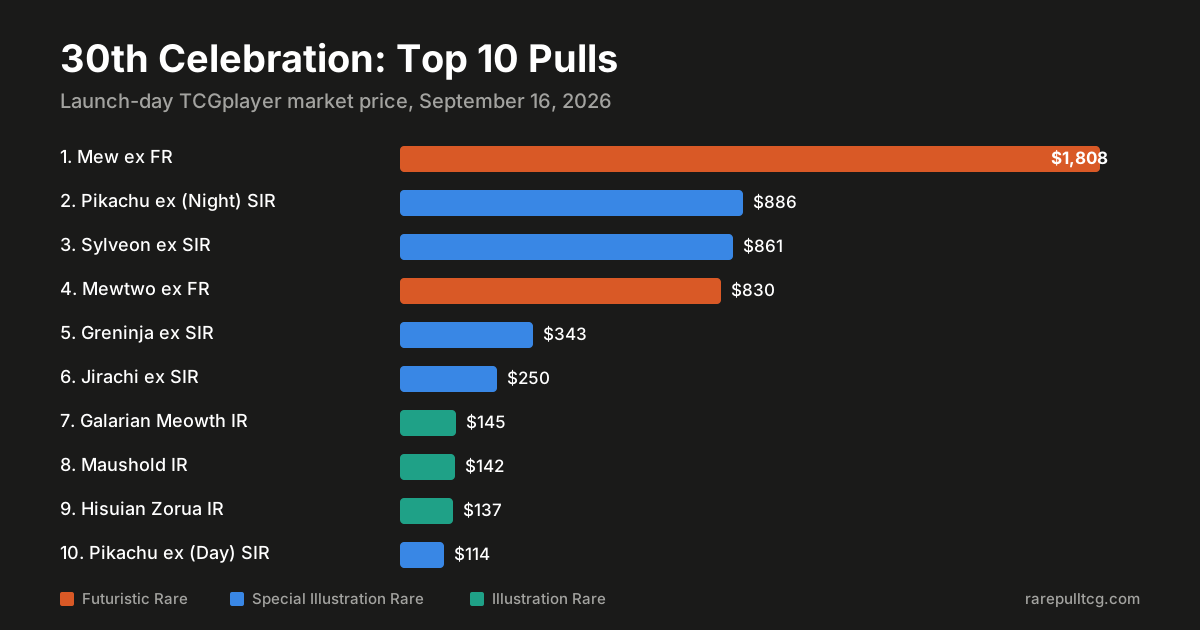
 Pokemon 30th Celebration Is Out Today: The Top 10 Pulls, Launch-Day Prices, and What We Would Actually Chase
 Market Analysis
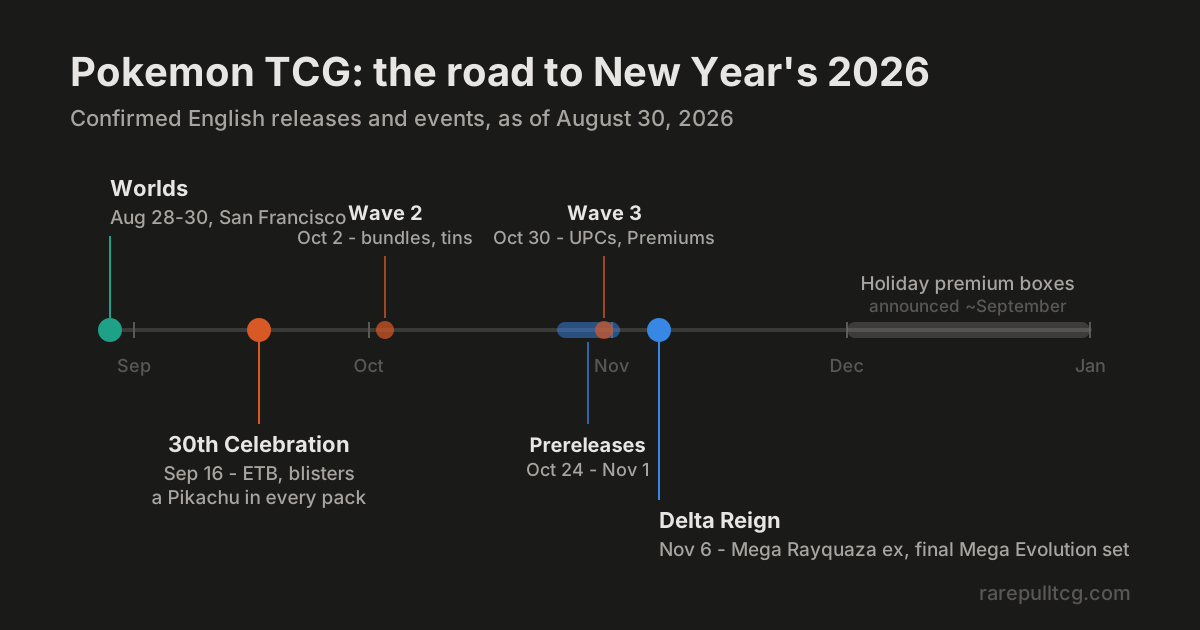
 Pokemon TCG Q4 2026 Preview: Worlds, 30th Celebration, Delta Reign, and Where the Money Goes
 Market Analysis