 🃏 Collecting Tips
 Table of Contents
Fake Pokemon cards have been a problem since the late 1990s, but 2026 is a different era entirely. Counterfeits have gotten sharper, the market has gotten bigger, and the stakes, with single cards regularly selling for hundreds or thousands of dollars, have never been higher. Whether you’re buying singles online, trading at locals, or picking up a lot from a private seller, knowing how to authenticate what you’re holding is a non-negotiable skill.
This guide covers every major test and visual check collectors use to separate real cards from fakes, from a quick five-second inspection to tools that leave zero doubt.
Why Fakes Are a Bigger Problem Than Ever
The Pokemon TCG market has exploded over the past several years, and wherever real money flows, counterfeiters follow. Several factors are making fakes more common and harder to detect:
- Higher card values create bigger incentives. When a single alternate art sells for $300-600, the margin on a convincing fake is enormous.
- Print technology has improved. Consumer-grade printers and card stock have reached a quality level where casual buyers can be fooled at first glance.
- Online marketplaces enable fast distribution. Sellers on eBay, Facebook Marketplace, and lesser-known platforms can move fakes before reviews catch up.
- Resealed product is increasingly common. Booster boxes and packs refilled with fakes are a growing problem, especially from unauthorized Amazon sellers and overseas storefronts.
The bottom line: spending real money on Pokemon cards in 2026 means knowing how to verify what you’re buying.
The Light Test
This is the fastest and most reliable quick check available, and it requires nothing but a flashlight or your phone’s light.
How it works: Hold the card up to a bright light source. A real Pokemon card will let a small, even amount of light through, a faint, uniform glow. Authentic cards are constructed with a thin black core layer sandwiched between two outer layers of printed cardstock. This black layer blocks most light and creates that consistent, subtle glow.
What fakes look like: Counterfeit cards either block light completely (too thick, wrong material) or let too much through (thin, single-layer cardstock). Some fakes show an uneven result, bright spots and dark patches, because the internal layering is inconsistent or missing.
For holofoil cards: The holo layer in authentic cards creates a distinctive pattern when backlit. Fakes often show a flat, uniform shimmer or no pattern at all.
A UV flashlight can enhance this test further, sometimes revealing inconsistencies in the card’s coating that aren’t visible under standard light.
Card Texture and Feel
Pick up enough real Pokemon cards and your fingers will learn what authentic feels like before your brain processes it.
Real card texture: Authentic cards have a specific surface feel, a fine, consistent grain on the front with a subtle resistance when you drag your finger across it. Holofoil cards have a different texture on the holographic area than the non-holo portions. Modern textured cards (full arts, alt arts, special illustration rares) have raised surface detail that corresponds to the artwork.
What fakes get wrong:
- Too smooth. The card feels slick, like glossy photo paper, no grain, no resistance.
- Too rough. Some fakes feel papery or gritty, like unfinished cardstock.
- Sticky or plasticky. Cheap lamination or coating gives some fakes a tacky feel that real cards never have.
- Wrong stiffness. Real cards flex smoothly and spring back. Fakes feel either too stiff or too flimsy.
Card Thickness and Weight
Real Pokemon cards have consistent physical dimensions. A jeweler’s scale and calipers are inexpensive tools that can be decisive when visual checks leave doubt.
Thickness: Authentic Pokemon cards measure approximately 0.3mm thick. Hold a suspect card between your fingers alongside a card you know is real, even a slight difference in thickness is immediately noticeable. Fakes are frequently thinner (single-layer stock) or thicker (multiple layers trying to compensate).
Weight: Real cards weigh approximately 1.77 grams. A jeweler’s scale that measures to 0.01g can confirm this quickly. Counterfeit cards often come in lighter (cheaper stock) or heavier (extra coating layers).
Card Thickness Calipers on Amazon
Font and Text Inconsistencies
Real Pokemon cards are printed with professional offset lithography, producing crisp, clean text at any magnification. A jeweler’s loupe (10x magnification) makes text inspection far more reliable.
What to examine:
- Text sharpness. Authentic card text has clean, hard edges at 10x magnification. Counterfeit text shows fuzzy edges or dot patterns from consumer inkjet printing.
- Font weight. The thickness of letters, especially the card name and HP number, is precise on real cards. Fakes often have slightly different weight, either too bold or too thin.
- Letter spacing. Subtle inconsistencies in spacing between characters or words indicate non-official printing.
- Ability and attack text. Pokemon TCG uses specific proprietary fonts. Wrong font or inconsistent sizing in body text is a common fake tell.
- Outright errors. Lower-quality fakes sometimes include typos, wrong energy symbols in attack costs, or awkward phrasing in ability descriptions.
Color Saturation Issues
Real Pokemon cards have consistent, accurate color reproduction. Counterfeits almost always get color wrong in one of two directions:
Oversaturated: Colors are too bright, almost neon. This is the most common color tell. Fake cards frequently crank the contrast and saturation in an attempt to look “vivid,” but the result looks wrong next to an authentic card.
Washed out: Some lower-quality fakes look faded. Yellows lean toward cream, blues read as gray, and the overall image looks like a degraded photocopy.
Comparing the card back-to-back with a known authentic card is the fastest way to catch saturation issues. The specific shade of blue on the Pokemon card back is notoriously hard for counterfeiters to match, too dark, too light, too purple, or too green are all immediate red flags.
Holo Pattern Differences
Holographic and foil cards carry the highest values and are among the most commonly counterfeited. Fortunately, holo fakes are often easier to catch once you know what authentic looks like.
Pattern type is era-specific. Base Set holos use a “cosmos” or “galaxy” pattern. Later sets use different foil styles, etched patterns, full-art textures, hyper rare rainbow effects, and more. A fake using the wrong holo pattern for its era is an immediate tell.
Holo placement and bleed. On authentic cards, the holographic area is precisely contained within defined regions. Fakes often show holo bleeding into areas where it shouldn’t appear, or not covering areas where it should.
Sparkle quality. Real Pokemon holofoil produces a natural, multi-colored rainbow effect when tilted under light. The transition is smooth and the colors are vivid. Fake holos tend to look flat, muted rainbow effect, abrupt color transitions, or a repetitive uniform sparkle pattern rather than an organic one.
Texture on modern cards. Full arts, alt arts, and special illustration rares have raised surface texture that corresponds to elements of the artwork. This is extremely difficult to counterfeit accurately. Missing texture, texture that doesn’t align with the artwork, or uniform texture applied across the whole card are all tells.
Back Pattern Alignment
The back of every Pokemon card has a centered design, the Poke Ball graphic sits within a bordered frame. On authentic cards, this alignment is consistent across every card in a print run.
On counterfeits, back pattern misalignment is common:
- The Poke Ball graphic is off-center within the frame
- The border is thicker on one side than the other
- The overall back design is slightly rotated compared to the card front
Lay a suspect card face-down next to several known authentic cards. Even subtle alignment differences become obvious when you’re comparing five cards at once.
Energy Symbol Details
Energy symbols in attack costs and card text are printed at small sizes, which makes them a useful authentication point, the quality difference between professional printing and consumer printing is magnified at small scales.
On real cards: Energy symbols are clean, properly scaled, and use the correct colors for each energy type. The symbols have hard edges and consistent fills under magnification.
On fakes: Energy symbols are frequently blurry, incorrectly sized, or the wrong shade. Some lower-quality counterfeits use placeholder symbols or get the color mapping wrong (a Fire energy symbol printed in the wrong red, for example).
A 10x loupe makes this inspection quick and conclusive.
Set Symbol Quality
Every Pokemon card from a specific set carries that set’s symbol in the lower right area of the card. Set symbols are another small detail where printing quality differences are exposed.
What to check:
- Crispness. The set symbol should have clean, hard edges at magnification. Blurry or soft edges indicate lower printing quality.
- Rarity dot. Next to the set symbol is a rarity indicator (circle for common, diamond for uncommon, star for rare). On authentic cards this dot/star is precise and well-defined. On fakes it’s often smudged or irregularly shaped.
- Correct symbol for the era. Verify the set symbol on the card actually matches the set the card claims to be from. Counterfeiters sometimes apply wrong set symbols.
The Rip Test (Definitive but Destructive)
This is the nuclear option, 100% conclusive, but it destroys the card. Use it only on a card you’re willing to sacrifice, like a duplicate common from the same source as a suspect expensive card.
How it works: Tear the card in half and examine the cross-section. Authentic Pokemon cards have a black core layer sandwiched between two white outer layers. This black layer is a deliberate security and opacity feature.
What fakes reveal:
- All white interior, no black layer at all. The most common fake construction.
- Gray or blue core, some higher-effort fakes attempt a dark core but get the color wrong.
- No visible layers, single-layer cardstock tears cleanly without showing any internal structure.
If you buy a lot of 50 cards from an unknown source, sacrificing one common from the batch to run this test is a smart move.
Where Fakes Are Most Commonly Found
High risk:
- Amazon third-party sellers, Amazon’s commingled inventory means even “sold by Amazon” product can include counterfeits mixed into legitimate stock. Stick to items sold and shipped directly by Amazon or the official Pokemon Center storefront.
- eBay (new or low-feedback sellers), eBay has a huge legitimate Pokemon market, but unverified sellers with thin history are a risk. Always check seller feedback count and rating, examine all provided photos, and use eBay’s buyer protection if something arrives wrong.
- Facebook Marketplace and private groups, No platform-level authentication. Great for deals, but only buy if you can inspect in person or the seller has strong community reputation.
- Flea markets and swap meets, Common source for counterfeit lots. All of the physical tests above apply here, and you can inspect in person before buying.
- Wish, Temu, AliExpress, These platforms are a primary origin point for counterfeit cards. Cards at suspiciously low prices from these sources are almost certainly fake. Avoid entirely for collectible purchases.
Lower risk:
- The Pokemon Center (pokemon.com), Direct from The Pokemon Company. Sealed product is guaranteed authentic.
- Local game stores with official Pokemon event status, Receive product directly from authorized distributors.
- TCGPlayer Verified Sellers, TCGPlayer’s verification and buyer protection system makes it one of the safer platforms for singles.
Quick-Reference Checklist
Use this before any significant card purchase:
- Light test, faint, even glow through the card
- Color saturation, vibrant and accurate, not neon or washed out
- Card back blue, matches known authentic shade exactly
- Back pattern alignment, Poke Ball centered, borders even
- Texture, fine grain on front, appropriate resistance
- Thickness, ~0.3mm, matches authentic card held alongside
- Weight, ~1.77g on a jeweler’s scale
- Text sharpness, crisp edges under 10x magnification
- Font consistency, correct weight and spacing throughout
- Energy symbols, clean, correct colors under magnification
- Set symbol, crisp, correct rarity indicator, right symbol for the set
- Holo pattern, era-correct pattern, smooth rainbow effect, proper placement
- Holo texture (modern cards), raised texture aligned to artwork
Recommended Authentication Tools
These tools are inexpensive and cover every test in this guide:
- 10x Jeweler’s Loupe, Essential for text, font, energy symbol, and set symbol inspection
- UV Flashlight, Enhances the light test, reveals coating inconsistencies
- Jeweler’s Scale (0.01g precision), Weight verification for suspect cards
- Digital Calipers, Precise thickness measurement
- Card Sleeves and Top Loaders, Protect authentic cards once verified
Frequently Asked Questions
Can a high-quality fake pass the light test? Higher-quality counterfeits are getting closer to authentic, but most still fail the light test. It catches roughly 80-90% of fakes on its own. Combine it with texture, weight, and print quality checks for near-certainty. The rip test remains the only 100% definitive non-grading method.
Are Japanese Pokemon cards faked as much as English ones? Less frequently, but it happens, especially for high-value promos and alt arts. The same tests apply to Japanese cards. Pay particular attention to text quality; Japan’s commercial printing standards are extremely high, and Japanese fakes tend to look noticeably lower quality under magnification.
What should I do if I receive a fake card from an online purchase? Document everything immediately, photos and video of the card and packaging. File a dispute through the platform’s buyer protection system. On eBay, TCGPlayer, and Amazon, counterfeit claims are taken seriously and typically resolved in the buyer’s favor. Do not ship the card back without getting return authorization in writing first.
Is there an app that detects fake Pokemon cards from a photo? Several apps claim to authenticate cards via photo analysis, but none are reliable enough to replace physical inspection. Use them as a supplementary check at best. Physical tests, especially the light test, texture check, and magnification, remain far more accurate than any current app.
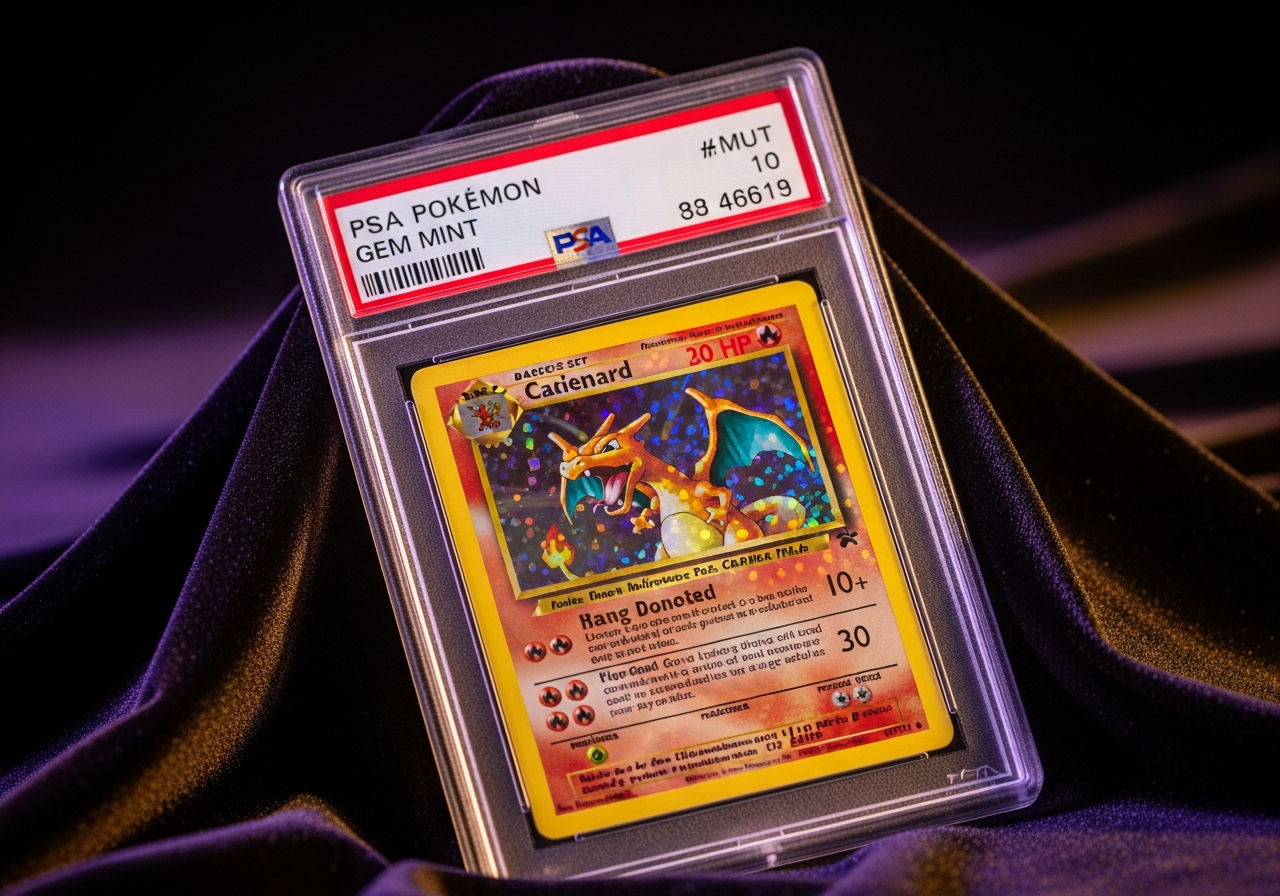
Does getting a card graded guarantee it’s authentic? Professional grading companies (PSA, CGC, BGS) include authentication as part of their grading process and catch the vast majority of counterfeits. A graded card in a sealed case is considered authenticated. Extremely sophisticated counterfeits have occasionally slipped through, but this is rare. For high-value purchases, professional grading is the gold standard for authentication and resale value alike.
The counterfeit card problem is not going away, as card values continue to climb and printing technology improves, fakes will only get harder to spot with a casual glance. But a collector who runs the tests in this guide is extremely unlikely to get fooled. Make the light test, texture check, and print quality inspection a habit for every purchase, and you’ll keep your collection authentic and your investment protected.
Sponsored
Build Your Collection
Explore more guides, set reviews, and market insights from TCG Collector Hub.
Browse More Guides
Build Your Collection
Discover more guides, investment tips, set reviews, and market analysis from TCG Collector Hub.