 🃏 Collecting Tips
 Table of Contents
If you’ve ever looked at Pokemon card prices and noticed a massive gap between a raw card and a graded one, you already understand why grading matters. A raw Base Set Charizard might sell for a few thousand dollars. Slap a PSA 10 label on it, and suddenly you’re looking at six figures. But PSA isn’t the only game in town. Beckett Grading Services (BGS) and Certified Guaranty Company (CGC) both compete for your cards, and your money.
Choosing the right grading service can mean the difference between maximizing your card’s resale value and leaving money on the table. Let’s break down how each service works, what they cost, and which one makes the most sense for your collection in 2026.
What Is Card Grading and Why Does It Matter?
Card grading is the process of sending your card to a professional service that evaluates its condition on a standardized scale, typically 1 to 10. The card is then encapsulated in a tamper-evident case with a label showing the grade. This does three things:
- Authenticates the card as genuine
- Standardizes the condition so buyers know exactly what they’re getting
- Protects the card in a sealed, archival-quality case
For collectors and investors, grading removes guesswork from transactions. A PSA 9 is a PSA 9 whether you’re buying from a local card shop or an online marketplace. That consistency drives higher prices and buyer confidence.
PSA (Professional Sports Authenticator)
PSA is the most recognized name in card grading and dominates the Pokemon TCG market. Founded in 1991, they’ve graded hundreds of millions of cards across sports and trading card games.
Grading Scale
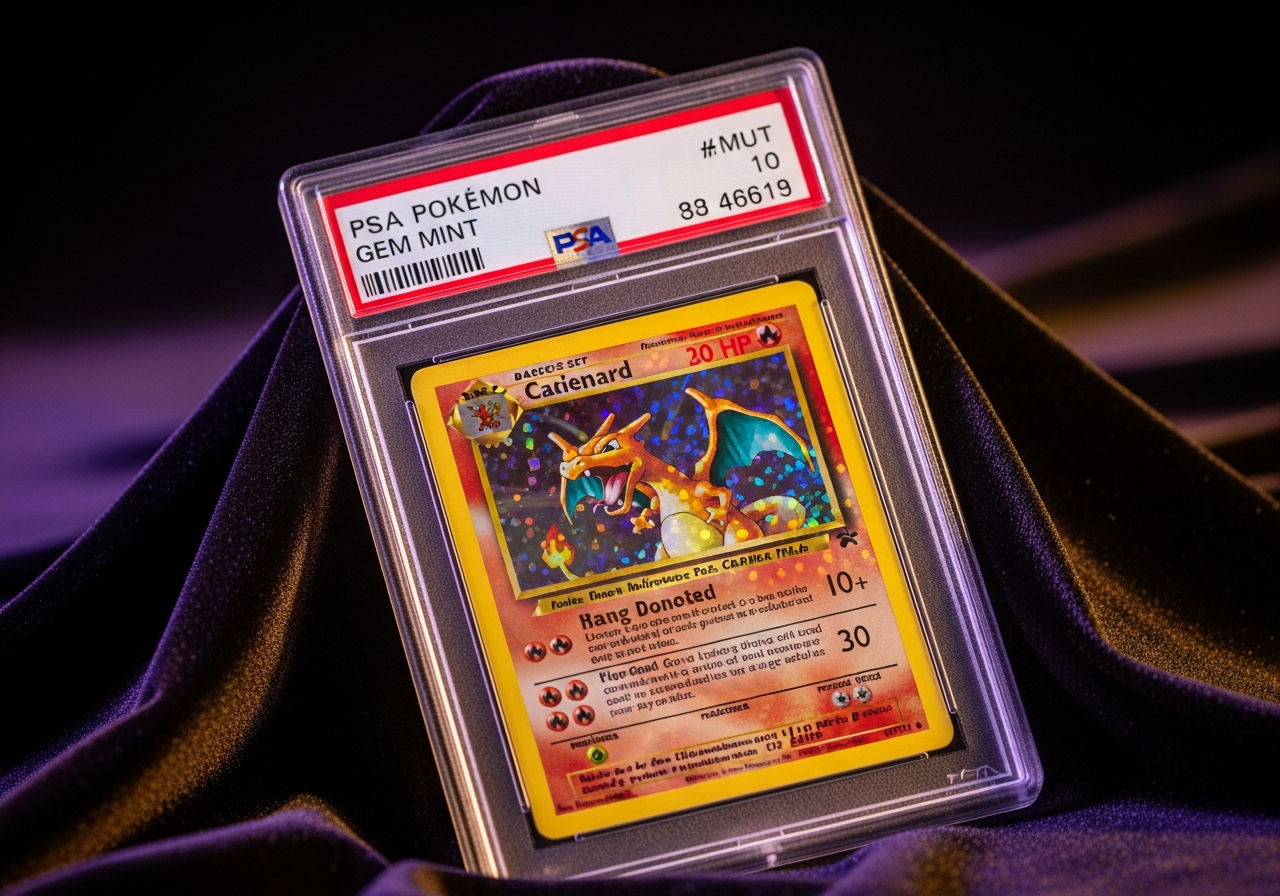
PSA uses a 1-10 scale with no sub-grades. You get a single number: PSA 1 (Poor) through PSA 10 (Gem Mint). They also offer a “PSA Authentic” designation for cards that are genuine but have been altered or damaged beyond grading.
Turnaround and Pricing (2026)
| Service Level | Turnaround | Price Per Card |
|---|---|---|
| Value | 50+ business days | ~$25 |
| Regular | 25 business days | ~$50 |
| Express | 10 business days | ~$100 |
| Super Express | 5 business days | ~$200 |
| Walk-Through | 1 business day | ~$600 |
Pros
- Highest resale premiums. PSA 10s consistently sell for more than BGS 9.5s and CGC 10s in the Pokemon market.
- Most liquid. More buyers recognize and trust PSA labels, making cards easier to sell.
- Simple grading scale. One number, no confusion.
- Massive population reports. Easy to research how many copies exist at each grade.
Cons
- Slower turnaround at lower price tiers compared to competitors.
- No sub-grades. You don’t know if your PSA 9 barely missed a 10 or barely made a 9.
- Higher volume means longer waits during busy periods.
Browse PSA-graded Pokemon cards on Amazon
BGS (Beckett Grading Services)
Beckett is the second-largest grading company and is known for its more detailed, sub-grade system. They have a strong reputation in sports cards and a growing presence in the Pokemon TCG space.
Grading Scale
BGS uses a 1-10 scale but adds four sub-grades: Centering, Corners, Edges, and Surface. Each sub-grade gets its own score, and the final grade is a weighted average. A BGS 10 “Pristine” is exceptionally rare, even rarer than a PSA 10, and a BGS 10 Black Label (all four sub-grades at 10) is the holy grail of graded cards.
Turnaround and Pricing (2026)
| Service Level | Turnaround | Price Per Card |
|---|---|---|
| Economy | 50+ business days | ~$20 |
| Standard | 20 business days | ~$50 |
| Priority | 5 business days | ~$150 |
| Premium | 2 business days | ~$300 |
Pros
- Sub-grades provide transparency. You can see exactly where your card lost points.
- BGS 10 Black Label commands extreme premiums. A Black Label can outsell a PSA 10.
- Competitive pricing at the economy tier.
- Strong reputation among serious collectors who value detailed grading.
Cons
- Lower liquidity in the Pokemon market. PSA is still king for Pokemon; BGS is more popular for sports cards.
- BGS 9.5 often sells for less than PSA 10, even though they represent similar quality.
- Sub-grades can be confusing for newer collectors.
CGC (Certified Guaranty Company)
CGC entered the trading card market in 2020 and has grown rapidly. They were already well-established in comic book grading and brought that infrastructure to cards.
Grading Scale
CGC uses a 1-10 scale with half-point increments and optional sub-grades. Their labels are clean and modern, and they offer a “Pristine 10” designation for cards that are essentially flawless.
Turnaround and Pricing (2026)
| Service Level | Turnaround | Price Per Card |
|---|---|---|
| Economy | 50+ business days | ~$18 |
| Standard | 15 business days | ~$40 |
| Express | 5 business days | ~$100 |
| Walk-Through | 1 business day | ~$500 |
Pros
- Most affordable entry point. The economy tier is the cheapest among the big three.
- Fastest standard turnaround. CGC has historically been faster than PSA at comparable price points.
- Clean, modern labels. Many collectors find CGC cases aesthetically appealing.
- Good for modern cards. CGC has carved out a niche for grading modern Pokemon sets.
Cons
- Lowest resale premiums of the three. CGC 10s typically sell for less than PSA 10s.
- Newer to the market. Less historical data and smaller population reports.
- Still building trust among some segments of the collecting community.
Shop CGC-graded Pokemon cards on Amazon
Head-to-Head: Which Service Should You Choose?
The answer depends on your goals.
If you want maximum resale value: Go with PSA. The premium on PSA 10s in the Pokemon market is real and well-documented. For high-value vintage cards especially, PSA is the standard.
If you want detailed feedback on card condition: BGS sub-grades tell you exactly why your card received its grade. This is valuable if you’re learning to self-grade or want to know how close a card was to the next tier.
If you’re grading modern cards on a budget: CGC offers the best combination of price and turnaround for cards that aren’t going to command five-figure premiums. For modern chase cards from Scarlet & Violet or Prismatic Evolutions, CGC is a solid choice.
If you’re chasing the ultimate grade: A BGS 10 Black Label is the rarest and most prestigious grade in the hobby. It commands prices that even PSA 10s can’t match, but it’s also extraordinarily difficult to achieve.
Tips for Maximizing Your Grade
No matter which service you choose, these practices will help you get the best possible grade:
- Handle cards by the edges only. Fingerprints on the surface are the most common reason for lost points.
- Use penny sleeves and top loaders immediately after pulling a card from a pack.
- Check centering before submitting. Use a centering tool or app, a card that’s visibly off-center won’t get a 10 from any service.
- Inspect under bright light for surface scratches, print lines, and whitening on edges.
- Don’t submit everything. Grading fees add up. Focus on cards worth at least 5-10x the grading cost in their graded form.
The Bottom Line
Grading transforms a raw Pokemon card into a verified, protected, and standardized collectible. PSA remains the gold standard for resale value in the Pokemon market, but BGS and CGC both offer compelling advantages depending on your priorities and budget. The best approach for most collectors is to use PSA for high-value vintage cards and CGC or BGS for modern cards where the grading fee represents a larger percentage of the card’s value.
Whatever you choose, the most important step is getting your valuable cards out of binders and shoeboxes and into protective cases, whether graded or not.
Frequently Asked Questions
How long does it take to get a Pokemon card graded?
Turnaround times vary by service level and company. Economy tiers at PSA, BGS, and CGC typically take 50 or more business days. Faster options are available at higher price points, with walk-through services returning cards in 1-2 business days for several hundred dollars per card.
Is it worth grading a Pokemon card that isn’t in perfect condition?
It depends on the card’s value. A Base Set Charizard is worth grading even at a PSA 7 because the authenticated, encapsulated version still commands a significant premium over raw. For most modern cards, grading only makes financial sense if the card is likely to receive a 9 or 10.
Can I get a card re-graded if I disagree with the grade?
Yes. All three services allow you to resubmit a card for re-grading, though you’ll pay the grading fee again. PSA calls this a “review” service. Keep in mind that grades can go down on resubmission as well as up.
What’s the difference between a PSA 10 and a BGS 10 Black Label?
A PSA 10 (Gem Mint) means the card is virtually flawless under standard grading criteria. A BGS 10 Black Label means the card received a perfect 10 in all four sub-grade categories, centering, corners, edges, and surface. Black Labels are significantly rarer and often sell for a premium over PSA 10s.
Does the grading company I choose affect my card’s value?
Yes. In the Pokemon TCG market, PSA-graded cards consistently sell for the highest premiums. BGS and CGC grades are respected but generally command lower prices for equivalent grades. The gap is largest for vintage and high-value cards.
Sponsored
Build Your Collection
Explore more guides, set reviews, and market insights from TCG Collector Hub.
Browse More Guides
Build Your Collection
Discover more guides, investment tips, set reviews, and market analysis from TCG Collector Hub.