 🃏 Collection Tips
 Table of Contents
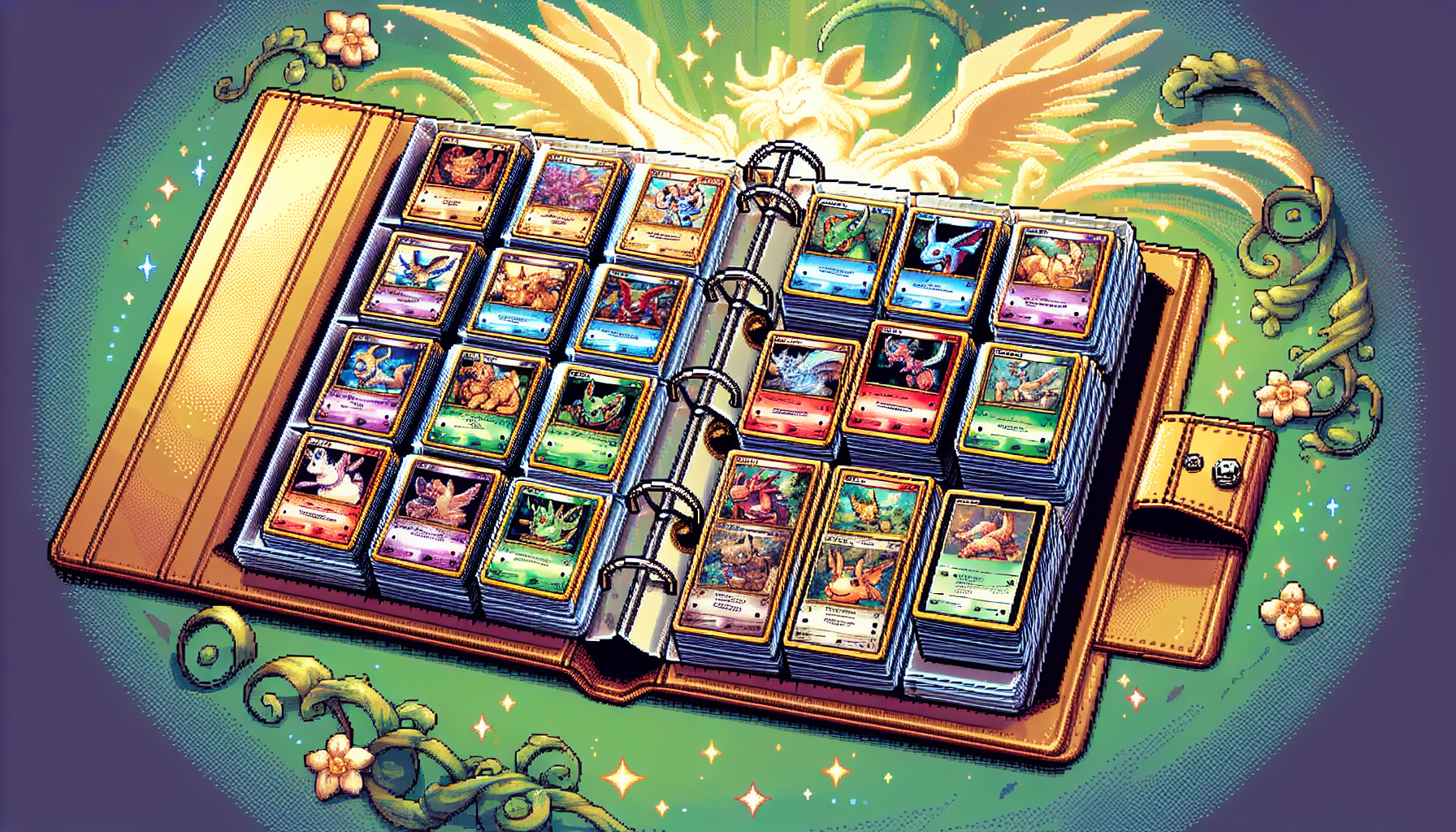
Your trade binder is your storefront. When you sit down at a league night, a local game store event, or a convention trade table, the binder you slide across is the first impression other collectors get of you as a trader. A messy, disorganized binder full of random commons tells people you don’t know what you’re doing. A clean, well-curated binder with smart organization tells them you take this seriously, and that you’re someone worth trading with.
The difference between walking away with an incredible deal and walking away empty-handed often comes down to how your trade binder is built. Here’s everything you need to know about putting together one that actually works.
Why Your Trade Binder Matters More Than You Think
Think about it from the other person’s perspective. They’ve got 15 minutes between rounds at a Pokemon TCG league night, and three people want to trade. They’re going to spend the most time with the binder that’s easy to browse, clearly organized, and full of cards they actually want.
A great trade binder does three things. It protects your cards so they stay in tradeable condition. It showcases your best trade stock in a way that draws people in. And it communicates that you know your stuff, which means other experienced traders will take you seriously when you sit down to negotiate.
If you’re wondering how to trade Pokemon cards more effectively, this is step one. The binder itself is part of the strategy.
Choosing the Right Binder
Not all binders are created equal, and the wrong one can actually damage your cards. Here’s what to look for.
Side-loading pages are non-negotiable. Top-loading pocket pages let cards slide out when you flip through. It happens constantly, especially at busy events where people are flipping pages quickly. Side-loading pages keep your cards locked in place. This is the single most important feature in a Pokemon TCG trade binder.
Bound vs. ring binder is the next decision. Ring binders (like a standard 3-ring) are flexible because you can add or remove pages, but the rings can dent cards if pages shift and press against them. Zip-bound portfolio binders eliminate that risk entirely and tend to look more professional.
For most collectors, a dedicated portfolio-style binder is the way to go. Two brands stand out:
Vault X makes some of the best binders in the hobby right now. Their 12-pocket zip binder with side-loading pages is practically the gold standard for trade binders. The stitching is solid, the pages are acid-free, and the zipper keeps everything secure during transport. You can grab the Vault X 12-Pocket Premium Zip Binder on Amazon and see why so many collectors swear by them.
Ultra Pro is the other reliable option, especially their PRO-Binder line. They’re widely available, come in multiple sizes, and the side-loading pages are built in. The Ultra Pro 12-Pocket PRO-Binder is a solid choice if you want something affordable that still does the job well.
A 9-pocket binder works fine too, especially if your trade stock is smaller. The key is side-loading pages and decent build quality. Skip the cheap dollar store binders with top-loading sleeves. Your cards deserve better, and so do your trades.
What Goes IN the Trade Binder
This is where most people get it wrong. Your trade binder is not your personal collection. It is not your master set binder. It is a curated selection of cards you are willing to trade, organized to attract other traders.
The value sweet spot. Fill your binder with cards in the $2 to $50 range. This is where the vast majority of trades happen. Cards under $2 aren’t worth the page space. Cards over $50 are better negotiated individually rather than left in a binder where someone might handle them carelessly.
Playable cards move fast. Competitive staples, popular trainers, and meta-relevant Pokemon are always in demand. If you pulled a card that’s seeing play in the current Standard or Expanded format, put it in the binder. Competitive players at league nights are your most active trading partners.
Alternate arts and special rarity cards are trade binder gold. Illustration Rares, Special Art Rares, and full-art trainers are the cards that make people stop flipping and start negotiating. Even if a card isn’t competitively relevant, a stunning alternate art will catch eyes.
Recent set hits should always be represented. When a new Pokemon TCG set drops, everyone wants cards from it. Having fresh pulls from the latest release makes your binder a destination.
How to Organize Your Trade Binder
Organization is the difference between a binder people flip through in 10 seconds and one they spend five minutes studying. Here are the most effective approaches.
By value tier is the most trade-friendly organization. Put your highest-value cards in the front pages. This hooks people immediately and tells them your binder is worth their time. Mid-range cards go in the middle, and your $2-5 trade fodder fills the back.
By type or Pokemon works well if you have deep stock. Grouping all your Charizard cards together, all your Pikachu cards together, and so on makes it easy for collectors chasing specific Pokemon to find what they want fast.
By set is great if you have a lot of recent product. People completing sets will love you for this because they can flip straight to the set they need and scan for gaps in their collection.
Whatever system you pick, be consistent. And leave a few empty pockets between sections so pages don’t feel cramped. White space in a binder is like white space on a website: it makes everything easier to read.
Trade Binder Etiquette at League Nights and Events
Trading at Pokemon TCG events has unwritten rules. Knowing them makes everything smoother and earns you a reputation as someone people want to trade with.
Always ask before touching someone else’s binder. This is basic courtesy, but it matters. “Mind if I take a look?” goes a long way.
Don’t pull cards out of someone’s binder without asking. If you want a closer look, ask first. Some collectors are particular about handling, and that’s their right.
State your interest clearly. Instead of vaguely flipping through, say something like, “I’m looking for Illustration Rares from the latest set” or “Do you have any competitive Charizard ex cards?” This saves both of you time.
Be honest about condition. If someone pulls a card from your binder and asks about condition, be upfront. Misrepresenting condition is the fastest way to tank your trading reputation.
Don’t pressure people. If someone says they want to think about it, respect that. Pushy traders get avoided at future events. The Pokemon TCG community is smaller than you think, and word travels.
What NOT to Put in Your Trade Binder
Just as important as what goes in is what stays out.
Your personal collection chase cards. If you’d be heartbroken to trade it, don’t put it in the binder. You’ll either turn down every offer and waste people’s time, or you’ll get talked into a trade you regret.
Bulk commons and uncommons. Nobody is flipping through a trade binder for Bidoof. If you want to move bulk, bring it separately in a box and mention it. Don’t waste premium binder pages on it.
Damaged cards without clear labeling. If you have HP or Damaged cards worth trading, that’s fine, but mark them clearly. A small sticky note or a consistent placement on the page (like always bottom-right for played condition) prevents misunderstandings.
Cards you haven’t priced recently. The Pokemon TCG market moves fast. A card that was $5 last month might be $15 today because of a tournament result, or it might have crashed to $2 after a reprint announcement. Don’t put cards in your binder without knowing their current value.
Pricing Your Trades
Every trade needs a shared baseline, and for the Pokemon TCG community, that baseline is TCGPlayer Market Price. This is the figure based on actual recent sales, not inflated asking prices.
Before any trade session, spend 10 minutes checking current market prices on the cards in your binder. Use the TCGPlayer app on your phone for quick lookups during the event itself. When you and your trade partner are both referencing the same pricing source, negotiations go smoothly.
A few pricing principles to keep in mind. Trade value and sale value are not the same. Most traders expect roughly even value on both sides of a deal, based on TCGPlayer Market Price. If someone is trading down (giving you one high-value card for several lower-value cards), it’s common courtesy to offer a small bonus on your side to make it worth their while. And always account for condition: a Lightly Played card should be valued at about 80-85% of the Near Mint market price.
Tips for Getting Better Trades
Once your Pokemon TCG trade binder is dialed in, these strategies will help you consistently come out ahead.
Trade at the right time. The best trades happen right after a new set releases, when demand is high and supply is still limited. If you pull a hot card on release weekend, its trade value will never be higher than it is at that moment.
Know what the other person collects. If you notice someone is building a Charizard collection and you have three Charizard variants in your binder, that’s leverage. Their desire for a specific card is worth more to them than the raw market price suggests.
Bring variety. A binder with 50 different tradeable cards will generate more deals than a binder with 15. More options mean more chances for someone to find something they want.
Be willing to do multi-card deals. Some of the best trades happen when you bundle several mid-range cards for one high-value card, or vice versa. Flexibility opens doors.
Keep your binder updated. Rotate cards in and out regularly. If something has been sitting in your binder for months with no interest, pull it and replace it with something fresh. A stale binder is a boring binder.
Build It, Bring It, Trade Up
A well-built Pokemon TCG trade binder is one of the most powerful tools in a collector’s kit. It protects your cards, attracts trading partners, and helps you consistently upgrade your collection without spending extra cash. Invest in a quality binder, curate your stock thoughtfully, keep your prices current, and treat every trade session as a chance to build both your collection and your reputation.
The best traders at any league night aren’t necessarily the ones with the most expensive cards. They’re the ones with the best binders. Now go build yours.
Sponsored
Build Your Collection
Explore more guides, set reviews, and market insights from TCG Collector Hub.
Browse More GuidesBuild Your Collection
Discover more guides, investment tips, set reviews, and market analysis from TCG Collector Hub.