 🃏 Competitive Play
 Table of Contents
If you’ve ever built a killer Standard deck only to watch half your cards become illegal a few months later, you already know the gut-punch of set rotation. It’s one of the most misunderstood mechanics in Pokemon TCG, and it trips up newer players constantly. The good news? Once you understand how rotation works, you can plan your collection and your budget around it instead of getting blindsided.
This guide breaks down how Pokemon TCG rotation works, what’s leaving Standard in 2026, and how to keep your deck legal without constantly rebuilding from scratch.
What Is Set Rotation?
Set rotation is the process by which Pokemon Company International (TPCi) removes older sets from the Standard format. Standard is the most popular competitive format for official tournaments and organized play, and it only allows cards from a specific window of recent sets.
Why does rotation exist? A few reasons. First, it keeps the card pool manageable. If every card ever printed were legal in Standard, the game would become impossibly complex and expensive to play competitively. Second, it forces the meta to evolve. Rotation kills off dominant strategies that have overstayed their welcome and opens the door for new archetypes to emerge. Third, it drives new product sales. That last one is business reality, but it doesn’t make rotation any less important to understand.
Rotation typically happens once per year, usually timed around the release of a new set or series block in late summer or early fall. TPCi announces the rotation well in advance, giving players time to adjust their decks and decide whether to invest in cards that are leaving soon.
How Standard Format Rotation Works in 2026
The Standard format in 2026 uses a block-based rotation system. Currently, the legal block window starts with the Scarlet and Violet base set and includes everything released through the current release cycle.
When rotation happens, the oldest sets in that window get removed. The cutoff moves forward, and any cards only printed in the rotated sets become illegal in Standard competition. Those cards don’t disappear from the game entirely. They become legal in the Expanded format, which allows sets all the way back to the Black and White era, and they’re always legal in Unlimited format.
Here’s the key thing to understand: a card is only tied to one printing for legality purposes. If a card was originally printed in a rotating set but was later reprinted in a legal set, the reprint is still playable. That’s why reprints matter so much to competitive players.
What Sets Are Rotating Out of Standard in 2026?
The anticipated 2026 rotation will remove the earliest Scarlet and Violet era sets from Standard. Based on TPCi’s historical rotation schedule and the current set timeline, collectors and players should expect the following sets to rotate out:
Sets expected to rotate out:
- Scarlet and Violet Base Set (March 2023)
- Scarlet and Violet Paldea Evolved (June 2023)
- Scarlet and Violet Obsidian Flames (August 2023)
- Scarlet and Violet 151 (September 2023)
- Scarlet and Violet Paradox Rift (November 2023)
These sets contain some of the most widely played competitive cards from the past two years. Rotation will shake up the meta significantly.
Notable cards losing Standard legality:
- Arven (Obsidian Flames) - one of the most played search supporters
- Iono (Paldea Evolved) - the premier hand disruption card
- Gardevoir ex (Paldea Evolved) - backbone of the top tier Gardevoir ex deck
- Chien-Pao ex (Paldea Evolved) - centerpiece of Baxcalibur/Chien-Pao strategies
- Pidgeot ex (Obsidian Flames) - the search engine behind countless combo decks
- Gholdengo ex (Paldea Evolved) - built the entire no-item lock archetype
If you’re running any of these cards as key pieces in your deck, rotation means rebuilding. If you’re a collector, it also means these cards may see a dip in price as competitive demand drops.
How Rotation Affects Card Values
This is where things get interesting for the collector side of the hobby. Rotation creates a very predictable price curve for competitive staples.
When a set is first released, staple cards climb in price as demand from competitive players spikes. As that set ages toward rotation, competitive players start cutting those cards from their decks or trading them off. The closer rotation gets, the more supply hits the market, and prices typically drop.
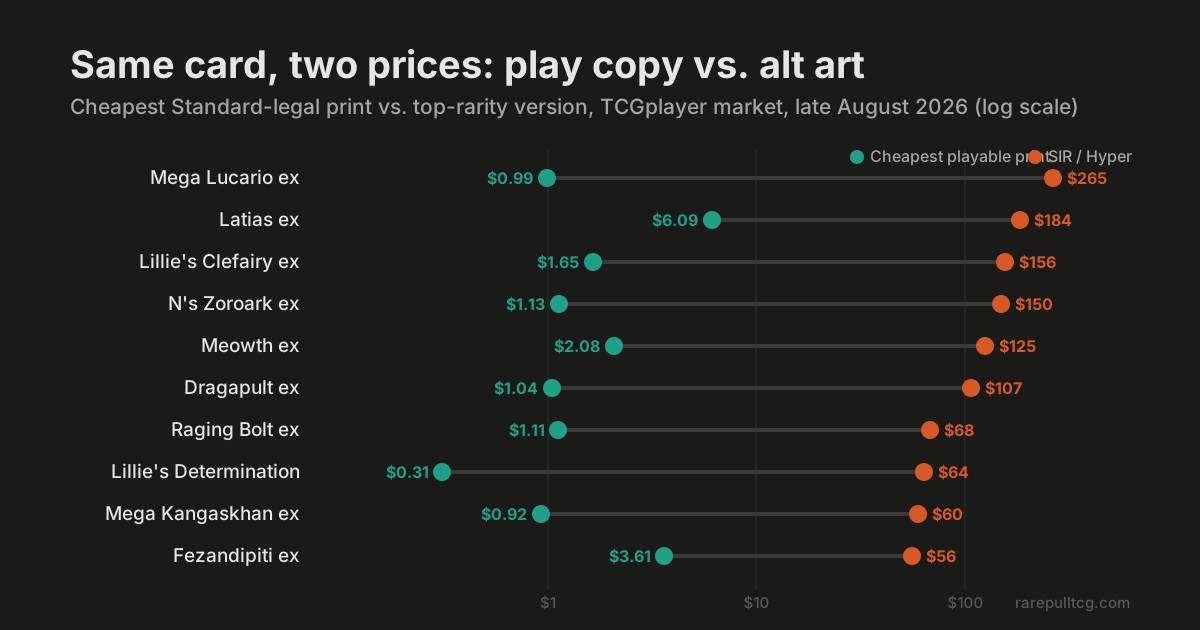
After rotation, competitive demand for Standard play disappears almost entirely. Cards that were $30 or $40 can drop to $5 to $10 or lower. This is actually a great opportunity for collectors who want high-art chase cards without the competitive premium. An Illustration Rare or Special Illustration Rare from a rotating set can often be picked up at a steep discount because the competitive crowd is unloading their copies.
The long-term investment play is different. Cards with iconic artwork, popular Pokemon, or historical significance tend to recover and climb over years in the collector market, regardless of Standard legality. A full-art Charizard from a rotated set is still a Charizard. The floor just gets lower before it bounces back.
How to Future-Proof Your Deck Before Rotation
The smartest move is to start auditing your deck 6 to 8 months before an expected rotation date. Here’s a simple process:
Step 1: Identify your rotation-vulnerable cards. Pull out every card from sets that are in the rotation window. If a set is more than two to three years old, it’s likely leaving soon.
Step 2: Find replacements in legal sets. Search for cards with similar effects in newer sets. The Pokemon TCG database at Pokemon.com is free and lets you filter by set and legality.
Step 3: Evaluate whether the archetype survives. Some decks lose one support card and are fine. Others lose their core engine and become unplayable. Be honest about whether it’s worth retooling or better to pivot to a new strategy.
Step 4: Pick up replacement cards early. After rotation is announced but before it takes effect, replacement cards in newer sets often spike in price because everyone realizes at the same time what they need. Buying early saves money.
For players who want to track their collection and deck legality without the headache, a good card binder system helps you sort by set and pull rotation candidates quickly. The Ultra Pro 9-Pocket Binder is a solid option for keeping sets organized separately so you can audit fast.
FAQ: Pokemon TCG Set Rotation 2026
When does Pokemon TCG rotation happen in 2026? TPCi typically announces rotation 2 to 3 months before it takes effect, with the actual rotation happening in late summer or early fall, often around August or September. Keep an eye on official announcements at Pokemon.com and Play Pokemon social channels for exact dates.
Can I still use rotated cards anywhere? Yes. Rotated cards remain fully legal in the Expanded format (Black and White era forward) and Unlimited format. They’re also perfectly fine for casual play, kitchen table games, and collecting. Only Standard competitive play restricts them.
Will my rotated cards lose all their value? Not necessarily. Competitive staples often drop in price after rotation, but collector-grade cards, Illustration Rares, and cards featuring fan-favorite Pokemon tend to hold value or recover over time. Rotation hurts competitive price floors more than it hurts high-end collector value.
How do I know if a card is currently Standard legal? The official Pokemon TCG card database at Pokemon.com shows legality for every card. You can also look for the regulation mark printed on the card itself. Currently, cards with the F, G, or H regulation mark are Standard legal. Cards with older marks are Expanded or Unlimited only.
Should I stop buying cards from sets that are about to rotate? For competitive play, probably yes, unless you plan to play Expanded. For collecting, rotating sets can actually be a buying opportunity. Once competitive demand drops, prices on beautiful full-art and Special Illustration Rare cards often fall to their collector floor, which can be a great time to pick up cards you love at a discount.
The Bottom Line
Set rotation is not something to fear. It’s a built-in feature of the competitive game that keeps things fresh and gives every new set a fair shot at shaping the meta. The collectors who get burned are the ones who don’t pay attention to the rotation calendar and buy into competitive staples right before they become obsolete.
Know what’s rotating. Track the timeline. Plan your buys accordingly. Whether you’re a tournament grinder trying to stay competitive or a collector watching for price dips on stunning artwork, understanding rotation makes you a smarter participant in this hobby.
The 2026 rotation is going to reshape Standard in a big way. The Arven and Iono era of the meta is coming to an end, and whatever emerges from the newer sets will define the next competitive season. That’s exciting, not scary. New metas mean new deck ideas, new chase cards, and new opportunities. That’s what keeps this game going after 30 years.
Stay sharp, and happy pulling.
Sponsored
Build Your Collection
Explore more guides, set reviews, and market insights from TCG Collector Hub.
Browse More Guides
Build Your Collection
Discover more guides, investment tips, set reviews, and market analysis from TCG Collector Hub.