 🃏 Collecting
 Table of Contents
Most Pokemon TCG collectors start the same way — ripping packs, chasing the shiniest cards, filling binders with whatever they happen to pull. It works, but there’s another style of collecting that hits differently: going all-in on a single character.
A character-focused collection has a goal. A finish line you can actually see. And when it comes together on a shelf or in a binder, it tells a story — your story, tied to a creature that meant something to you.
Here’s how to do it right.
Why Character Collecting Is So Rewarding
The Nostalgia Factor
You already know which Pokemon it is. The one from your first pack, your favorite episode, the one you named on your cartridge. Character collecting lets you channel that emotional connection into something tangible. Every card you track down feels like a win, not just a random hit.
The Goal Is Achievable
Unlike “collect every rare card ever printed,” a character collection has a defined scope. Even a popular Pokemon like Gengar has a few hundred unique cards across all sets. A more niche pick might have 40-60 cards total. You can build a complete — or near-complete — run without spending decades on it.
It Displays Beautifully
A full binder page of Charizard cards, sorted by era, from Base Set through the latest expansion, is a genuinely impressive display piece. Same with a shadowbox of graded slabs featuring your character across different art styles. The cohesion makes it pop in a way a random rare collection never will.
Picking Your Character
Go With Your Heart First
The most sustainable character collection is one you actually care about. If Umbreon reminds you of playing Gold and Silver as a kid, that emotional pull will keep you hunting when the search gets tedious. Pick the one that makes you excited, not the one you think you “should” collect.
Consider Market Realities
Once you have a character in mind, do a quick gut-check on what you’re getting into. Charizard is the king of character collecting — there are hundreds of cards and the chase pieces can cost hundreds to thousands of dollars. Pikachu has even more cards (the Pikachu V-UNION alone is a four-card set piece) and a devoted international collector base.
A niche pick like Sableye or Absol can be just as satisfying and significantly more affordable. If budget matters to you, picking a less mainstream character means more of your collection is reachable for under $5 per card.
Researching Every Card
Start With Bulbapedia
Bulbapedia’s TCG section is your best friend. Search your character’s name and you’ll get a complete list of every card ever printed featuring them — Base Set through the current expansion. Note the set name, card number, and variant (holo, reverse holo, full art, etc.). This becomes your master hunt list.
Cross-Reference on TCGPlayer
TCGPlayer has a strong search and filtering system. Search your character and sort by set to see what’s currently available, what it costs, and what condition copies are selling in. This also helps you quickly identify the cheap commons versus the expensive chase cards so you can plan your budget.
Don’t Forget Promo Cards
Promos are easy to miss. They’re often not in retail packs — they come from tournament kits, prerelease events, McDonald’s Happy Meals, and special box sets. Bulbapedia lists most of these, but also check eBay listings for your character to catch any promos that might be miscategorized online.
Building Your Hunt List
Once you’ve done your research, create a simple spreadsheet or use a collecting app like TCGdex or PokeCollector. Your list should include:
- Card name and set
- Card number
- Rarity
- Market price (rough estimate)
- Acquired (yes/no)
Sort it by price — cheapest to most expensive. This gives you a roadmap that starts accessible and builds toward the big chase pieces. You’ll feel momentum as you knock off rows near the top, and you’ll have a clear picture of how much budget you need for the expensive ones.
Where to Find the Cards
Singles Are Your Best Bet
If you’re collecting a specific character, buying singles beats cracking packs for efficiency. You’re not gambling — you’re purchasing exactly what you need. TCGPlayer, eBay, and Card Market (for European collectors) are the main platforms. Card condition matters for display and resale value, so decide early whether you’re going raw or graded.
Local Card Shops
Don’t sleep on your local game store. LCS staff often know their inventory and can pull character-specific cards you’d never find browsing. They may also hold singles in binders or boxes that aren’t listed online. Building a relationship with a shop owner can get you first dibs on trade-ins featuring your character.
Card Shows and Conventions
Pokemon TCG card shows are excellent hunting grounds. Multiple vendors in one place means price competition, and you can negotiate on lots. If you’re looking for older Base Set through Neo-era cards, shows often have more selection than online stores.
Sealed Product (When It Makes Sense)
Buying sealed packs or booster boxes for a character collection rarely makes financial sense unless the set heavily features your character and sealed is near cost basis. The exception: vintage sealed product that you want for the collection itself, or if you enjoy the ripping experience alongside the targeted hunt.
Budgeting Your Collection
Start With Commons and Uncommons
The bulk of any character collection is common and uncommon cards from various sets. These often run $0.25 to $2.00 each. Fill out the cheap end of your list first. You’ll be surprised how much progress you can make for $20-30 when you’re buying low-rarity singles in bulk.
Set a Chase Card Savings Goal
Identify the two or three most expensive cards on your list — the PSA 10 Charizard, the Pikachu Illustrator reprint, the Full Art from a vintage set — and set a separate savings goal for those. Treat them like a destination, not an impulse buy. When you’ve got the commons and uncommons handled, the chase card feels earned.
Set a Monthly Cap
Character collecting is a long game. A $30-50 monthly budget stretched over a year builds a serious collection without financial stress. Automate the savings, buy in batches, and enjoy the hunt.
Display and Storage
Binders With Premium Pages
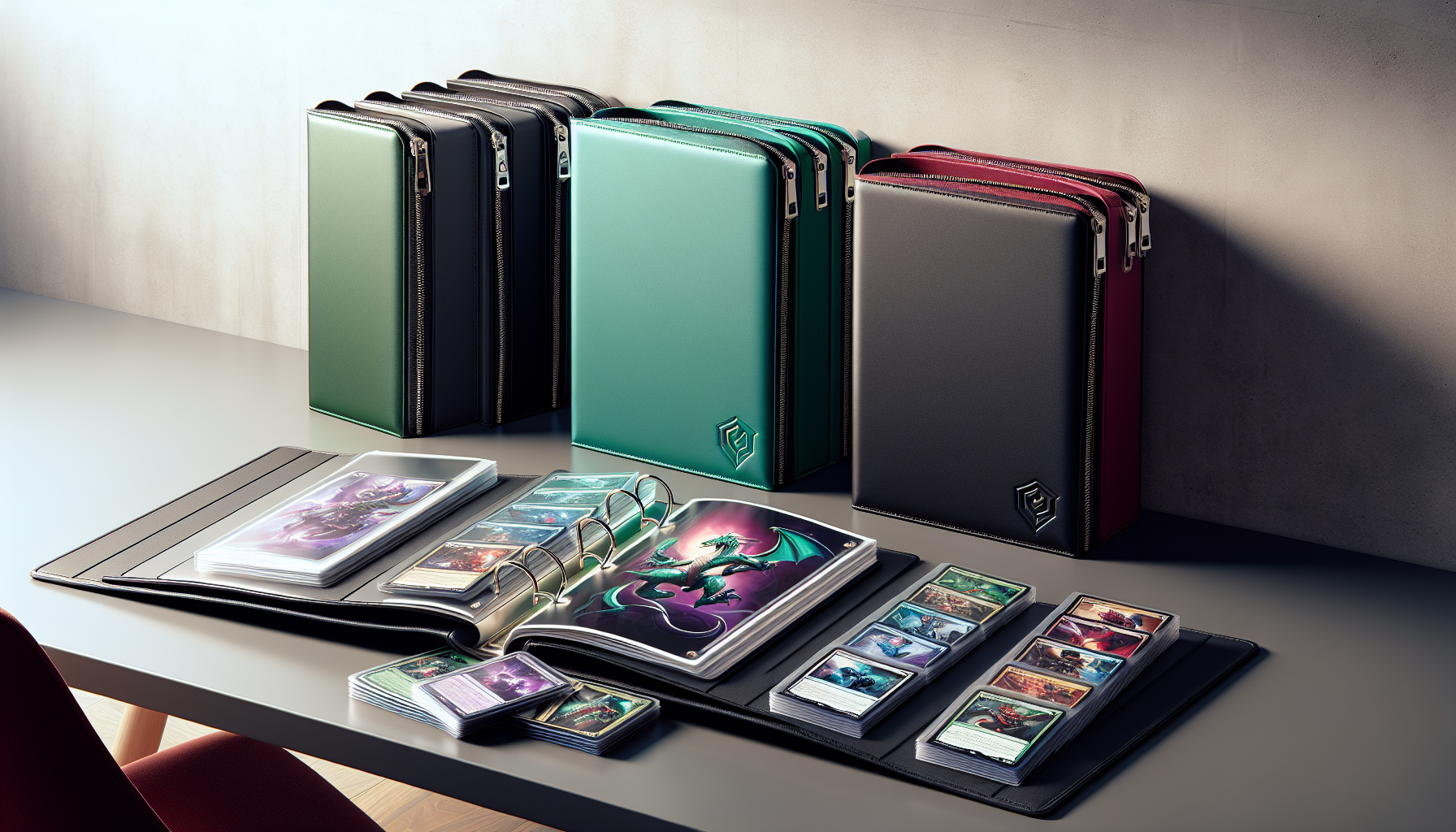
A 9-pocket binder with character cards sorted chronologically is the classic display format. Use side-loading binder pages — they hold cards more securely and are less likely to let cards slip and scratch. Sort by set release date for maximum nostalgia flow as you flip through.
Toploaders and Card Savers for Key Pieces
Any card worth more than $10-15 deserves individual protection. Semi-rigid card savers or hard toploaders keep them flat and protected. Label them with masking tape on the back if you want easy identification without damage.
Graded Slabs for the Trophies
For your rarest or most valuable cards, getting them graded (PSA, BGS, or CGC) adds protection and authentication. A graded slab also elevates the display — a shelf row of graded slabs featuring your character in sequential set order looks genuinely impressive. Factor grading costs ($15-30+ per card) into your budget for the chase pieces.
Real-World Examples
The Charizard Collector
Charizard has appeared on roughly 100+ unique English cards when counting all variants, full arts, and promos. A complete common/uncommon run can be assembled for under $200. The expensive end — Base Set Shadowless Charizard, Gold Star, Charizard ex alt arts from modern sets — can push the total collection value past $2,000-5,000+. This is the prestige pick. Expect a long hunt.
The Pikachu Collector
Pikachu may be the most printed Pokemon in TCG history with well over 150+ unique English cards. The cheap cards are plentiful and easy to find, but the collector ceiling is high — the Pikachu Illustrator (even modern reprints) and promo variants make this a deep rabbit hole. Great for someone who wants decades of collecting content.
The Gengar Collector
Gengar sits in the sweet spot. Around 80-100 unique English cards, strong art history (Gengar has gotten stunning full arts and alt arts in modern sets), and a passionate collector base that isn’t as price-inflated as Charizard. Expect $300-600 to build a solid complete-or-near-complete collection, with a few $50-150 chase cards sprinkled in.
Start Your Hunt
Character collecting is one of the most satisfying formats in the hobby. You’re not just accumulating cards — you’re curating a tribute to something that mattered to you. Every card you add to the binder is a piece of that story.
Pick your character. Build your list. Start with the cheap ones and work your way up. The chase pieces will be waiting when you’re ready for them.
The binder fills one card at a time.
Sponsored
Build Your Collection
Explore more guides, set reviews, and market insights from TCG Collector Hub.
Browse More GuidesBuild Your Collection
Discover more guides, investment tips, set reviews, and market analysis from TCG Collector Hub.